
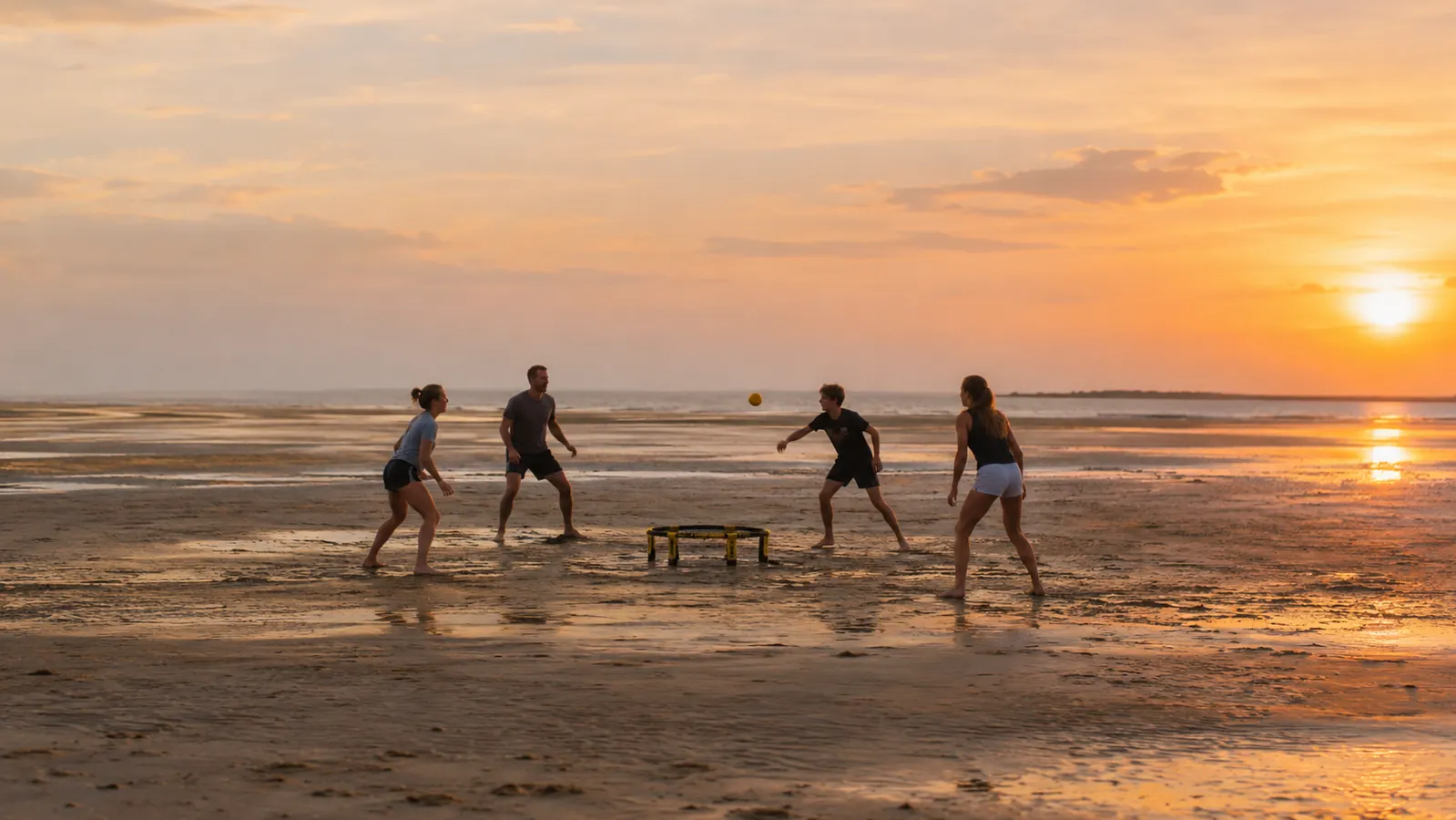
Every summer I tell myself the same thing: this is the year we find a beach game the whole family can actually agree on. The grandkids lose interest in the paddle set after ten minutes, Walt gets tired of chasing a frisbee in the wind, and the bocce balls sink into the soft sand like stones. Last June, our neighbor two umbrellas down set up something I had never seen before, a small round net that looked like a trampoline for a dollhouse, and within five minutes her two teenagers and my grandkids were all playing together. That was my introduction to the Spikeball Original 3 Ball Set.
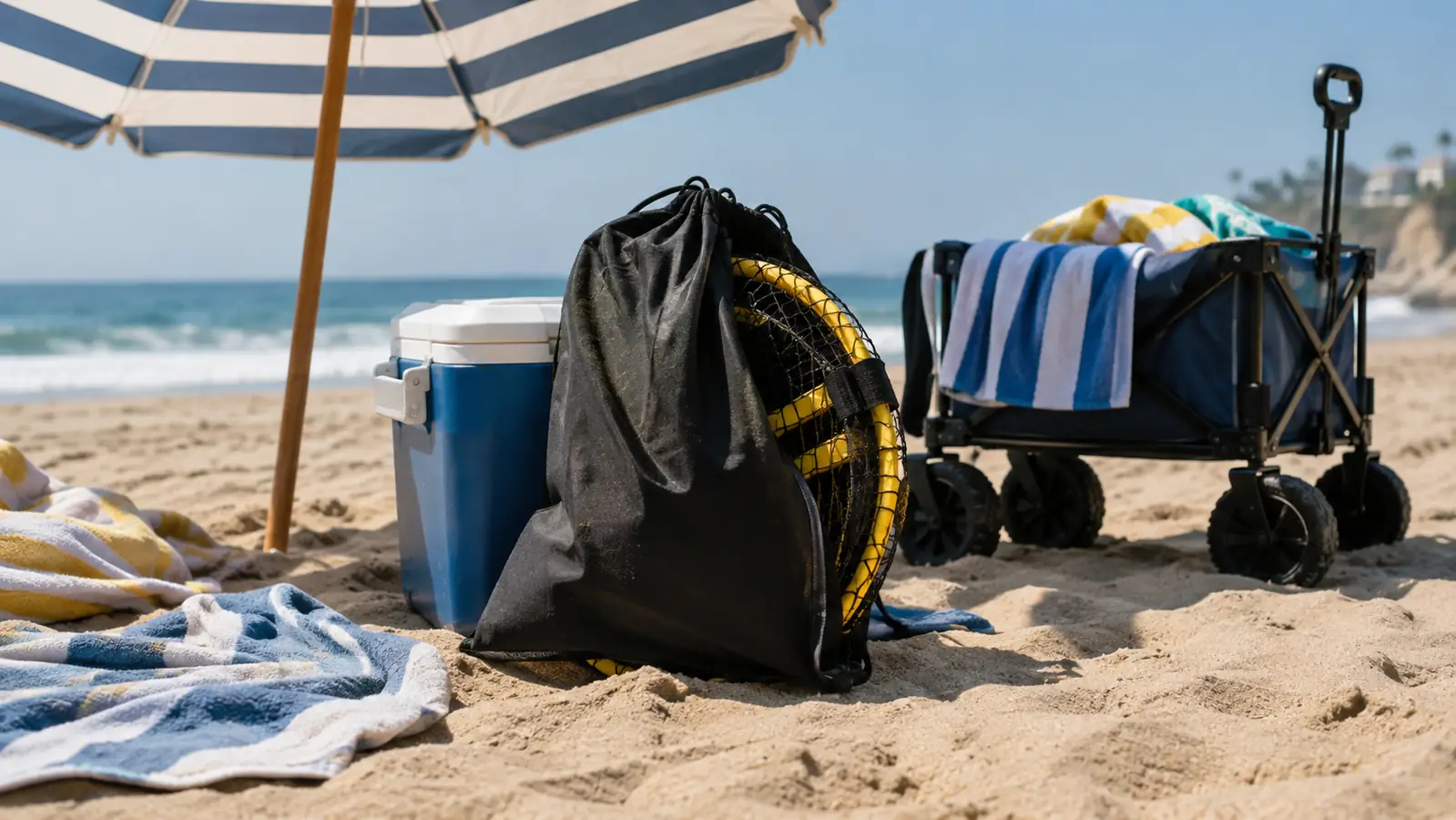
We ordered our own set that same week, and it has spent the whole summer riding to the beach in our wagon next to the cooler. We played it on calm mornings and windy afternoons, on firm sand near the water at low tide and on the softer stuff higher up the beach. I have set it up, taken it down, rinsed it off, and carried it home more times than I can count. After all that, I can tell you exactly what the Spikeball is and what it is not. It is not the answer to every beach afternoon, and it is not the easiest game for older knees. But it has become the first thing the grandkids ask for when we unpack the wagon, and that alone tells you a lot.
The Quick Verdict
A well-built roundnet set that has survived a full summer of sand, salt and grandkids without losing tension or shape. The learning curve is real but short, and the fun payoff is large. Best for families with at least one player willing to run after a low ball.
Amazon Check Today's Price →The game the grandkids asked for every single beach day
After a full summer of sand, salt and wind, the Spikeball Original is still the first thing out of the wagon. If your family needs a beach game that actually holds up, this is the one to start with.
Amazon Check Today's Price on Amazon →How I've Used It
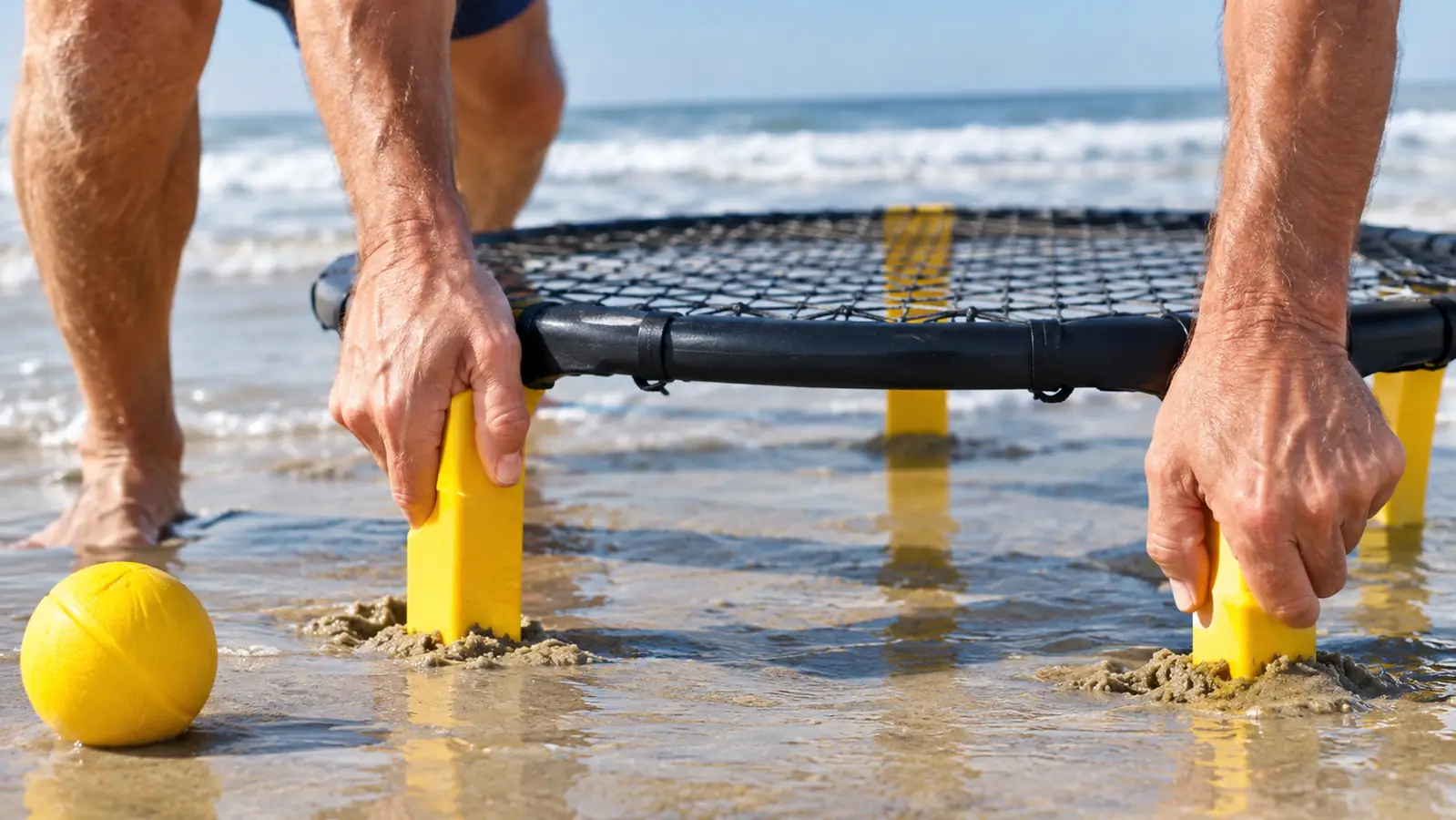
Our routine has been the same all summer. We load the wagon with the umbrellas, the cooler, the chairs and the Spikeball bag, then walk down to the wide, flat stretch of sand near the water that appears at low tide. That spot matters. The game needs firm sand to keep the legs planted, and the harder the surface, the truer the bounce. On soft, dry sand the net sinks a little and the ball dies on impact. We learned that on the second day and have looked for the firm strip ever since.
A typical session runs about forty-five minutes, sometimes longer when the grandkids bring friends. The game is fast, so people rotate in and out. I usually play for a few rallies, then hand my spot to whoever is waiting and watch from the chair. Walt plays more than I do, mostly because the ball stays low and he is still quick enough to get to it. On the days when the wind picks up, we switch to something calmer, because a gust can carry the ball off the net before anyone can react.
The set has also been on a few trips beyond the beach. We took it to a park picnic in July and to a backyard cookout at our neighbor's place, and it works just as well on grass and pavement. But the beach is where it has earned its keep, and that is the standard I am judging it by.
What Comes in the Box and How Easy It Sets Up
The box is small enough that I did not believe it held a full game at first. Inside you get the net frame, the three balls, and a drawstring carry bag that holds everything. The frame comes in sections that snap together, and the net stretches over the rim the same way you would fit a drumhead. The first time I did it, with no instructions in front of me, it took maybe four minutes. By the third time I could do it in under two.
The three balls matter more than people think. Roundnet balls take a beating, and a set that only gives you one or two means the game ends the moment one rolls into the surf. We have lost one ball to the ocean this summer, and having two spares meant the game never stopped. The balls themselves have held their shape, which surprised me, because they get hit hard and often. I checked them after the first month and again at the end of the summer, and neither showed a soft spot or a crack.
The bag is simple but well made. It has a drawstring top and a shoulder strap, and it fits easily into the top of the wagon. I have seen other families carry the same set by hand to the water, so it is light enough for that too. Nothing about the setup requires strength or flexibility, which matters to me at 64.
How It Holds Up to Sand, Salt and Wind
Durability was my biggest worry when we bought the Spikeball. The frame is thin metal tubing and the net is a mesh that looks like it could tear on a sharp shell. I am happy to report that after a full summer of weekly use, the set looks almost new. The frame has no rust, the net has no tears, and the tension has not loosened. I do rinse the frame with fresh water when we get home and let it dry before it goes in the bag, but that is the extent of the care we have given it.
The sand does not seem to bother the mechanism at all. Sand gets into everything at the beach, and I expected to find it grinding inside the frame joints by August. Instead, the sections still snap together cleanly and hold tight during play. The balls pick up a little grit on the surface, which is unavoidable, but it does not affect the bounce and wipes off easily.
Wind is the one real weakness, and it is worth knowing before you buy. The ball is light, and a steady breeze can push it off course mid-rally. We have played in winds that most people would consider mild and had a fine time, but on gusty days the game becomes frustrating for everyone. Our rule became: if the umbrellas are struggling, we leave the Spikeball in the bag.
What the Game Actually Feels Like
For anyone who has not played, roundnet is best described as volleyball meets four-square, played on a small trampoline net. Two teams of two stand opposite each other with the net between them. One player serves by bouncing the ball off the net toward the other team, and the rally continues until a team fails to return the ball within three touches. The ball can be hit off the net at any angle, which is what makes it tricky and addictive.
The learning curve is real. The first session, most of our rallies lasted three or four hits before someone sent the ball flying sideways. The grandkids picked it up faster than the adults, and by the end of the first afternoon they could keep a rally going. Walt and I improved more slowly. The technique is not hard, but it is unfamiliar, and the ball comes off the net at angles that feel random until your eye adjusts.
Once everyone gets the hang of it, the game is genuinely absorbing. Rallies get longer, people start diving, and the trash talk gets louder. I have watched the grandkids play for an hour straight without once asking for a snack, which is a statistic I trust completely. The pace is fast enough that four is the ideal number, though we have played with six by rotating in and out between rallies.
One thing I will say honestly: this is not a game for people who cannot move quickly. The ball stays low and the play area is small, so players need to take a step or two in any direction on almost every rally. I play, but I play less than I used to, and I am careful about lunging for balls that are out of reach. My knees are fine, and I want to keep them that way.
The Tradeoffs Nobody Mentions
Every review I read before buying mentioned the fun and the durability, and both turned out to be true. What the reviews did not mention are the small frustrations that only show up with regular use. The first is the size of the play area. The game is played close to the net, and with four active players, the space gets crowded quickly. Collisions happen, especially with kids who are not watching where they are going. We have had two minor crashes this summer, nothing worse than a bumped shoulder, but it is worth knowing.
The second is the setup location. This game demands firm, flat ground, and that is not every beach. On our beach, the firm strip near the water at low tide is perfect, but it is also where other people want to walk. We have had to move our setup twice to let a stroller or a fisherman pass. On soft sand the game simply does not work well, so if your beach is all soft sand, this may not be the game for you.
The third is wind, which I already mentioned but cannot overstate. A breezy day turns the ball into a moving target, and a gusty day makes the game unplayable. On the Jersey Shore, where the afternoon breeze is a fact of life, we have learned to play in the morning or accept a shorter session. None of these are reasons to skip the Spikeball, but they are reasons to know what you are buying.
Alternatives I Considered
I looked at a few other options before settling on the Spikeball Original, and since people ask me about it all summer, I will share what I found. The main competitor in this space is Slammo, which makes a very similar roundnet set at a similar price point. The build quality is comparable, and Slammo fans are loyal. What pushed me to the Spikeball was the ball quality and the company's history in the sport. Spikeball has been making this exact game for years, and the company runs a competitive league, which tells me they care about how the balls and net perform, not just how they look.
I also considered a cheaper generic set I saw at a big box store. It was tempting, but the reviews mentioned balls that went soft and nets that sagged after a few weeks. The beach is hard on equipment, and I did not want to spend the summer replacing a bargain set. The Spikeball cost more, but after a full season it has cost me nothing in repairs or replacements.
There are also accessories, like a larger net for a bigger court, but I have not felt the need. The Original is the size the sport is played at, and the grandkids have no trouble with it.
What I Liked
- Survived a full summer of sand, salt and weekly play with no rust, tears or sagging
- Sets up in about two minutes once you have done it a couple of times
- Three balls included, which matters when one rolls into the surf
- Genuinely fun for a wide range of ages once the basics click
- Compact bag fits easily into a beach wagon or tote
Where It Falls Short
- Learning curve is real; the first session is mostly missed hits
- Needs firm, flat sand or grass; soft sand makes the ball die
- Wind is a genuine problem on breezy days
- Small play area means collisions with four active players
- Not a game for anyone with bad knees or limited mobility
After dozens of sessions on the sand, the net still snaps tight and the balls still fly straight. That is the kind of proof I trust more than any promise on a box.
Who This Is For
The Spikeball Original is for families and groups who want a beach game that rewards a little effort. If you have kids or teenagers who like sports, or adults who are willing to spend twenty minutes getting the hang of something new, this game will pay you back all summer. It is especially good for groups of four, which is exactly how many people are in most beach setups, and it is one of the few games I have found where the grandkids and the adults can play together without one side getting bored.
It is also for people who value equipment that lasts. The beach destroys cheaper toys, and the Spikeball has proven it can take the abuse. If you are tired of buying a new game every June, this is the kind of purchase you make once and use for years.
Who Should Skip It
I would steer someone away from the Spikeball in a few specific situations. If you are looking for a casual game to play while sitting down, this is not it. Roundnet is an active sport, and even a relaxed session involves standing, reaching and moving. Anyone with knee, back or hip problems should think carefully, because the low ball and quick direction changes are hard on joints.
It is also not the best choice for very young children. The grandkids' youngest friend, who is six, could serve the ball but could not return it, and he got frustrated quickly. Kids under about eight will need a patient adult to play with them, or they will lose interest. And if your beach is all soft, dry sand with no firm strip near the water, you will be fighting the surface all day. In that case, a simpler game might serve you better.
Still the first game out of the wagon after a full summer
The Spikeball Original survived sand, salt and a July of grandkids without missing a beat. If you want the same for your beach bag, it is worth a look today.
Amazon Check Today's Price on Amazon →