
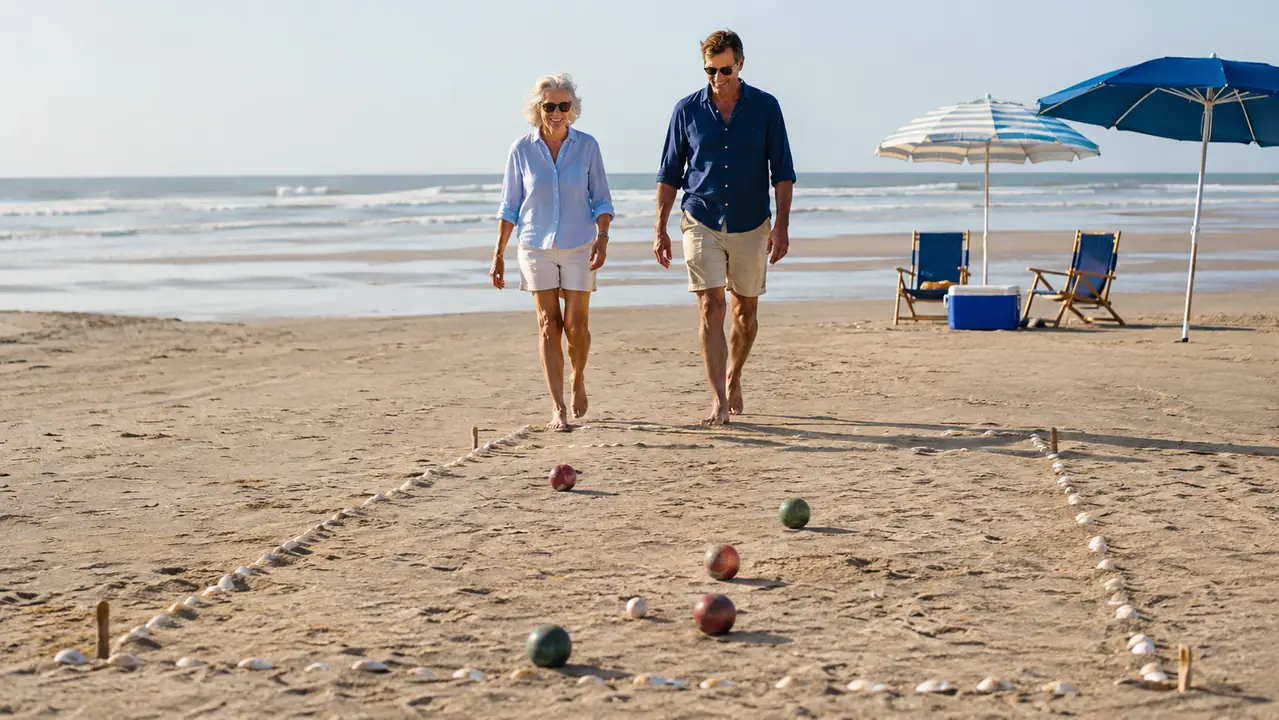
The first time I tried to play bocce on the beach, the balls disappeared into a patch of soft sand before they rolled six feet. My husband Walt and I spent more time digging them out than tossing them, and the grandkids wandered off to chase gulls. I nearly wrote off the whole game as a lawn-only sport. Then a neighbor two umbrellas down let us try her GoSports set, and I learned the trouble was never the game. It was how we were setting it up.
This guide is the version I wish someone had handed me that first morning. It covers how to pick a good patch of sand, how to lay out a court that survives a breeze, and the simple rules that keep a game moving when you have kids, a cooler, and a low-tide deadline. I have now spent three summers playing bocce on the Jersey Shore with a GoSports 90 mm set, and once you know the setup, it is genuinely the easiest game in the beach bag.
The GoSports 90 mm set is the one that stays in our wagon all summer
The balls hold up to sand and salt, and the set is easy to carry to the waterline. If you are shopping for a beach-ready game, this is the one I would buy again.
Amazon Check Today's Price on Amazon →Why Beach Bocce Needs Its Own Setup
Bocce is an old game, and the traditional rules assume a flat, closely mowed lawn. Beach sand is a different animal. Soft, dry sand grabs the ball and stops it short. A slope you barely notice when you are walking can send every toss curving toward the water. Wind can push a lightweight pallino, the little target ball, halfway down the court before anyone throws.
None of that means bocce does not work at the beach. It just means you have to set up with the sand in mind. The steps below are the routine I use now, and they take about five minutes once you have done it a few times. The payoff is a court that rolls true enough for close games, even with a breeze off the ocean.
I have seen people try to play in the soft sand above the tide line, and it ends the same way every time. The first ball sinks, the second ball rolls into it, and everyone gives up. The setup is not a formality. It is the difference between a game that lasts ten minutes and one that lasts all afternoon.
Before You Start: What You Need
You do not need much. Our wagon carries two umbrellas, a cooler, and the GoSports set. I also keep a few small items in the outer pocket: a roll of masking tape, a set of plastic picnic markers, and a long tape measure. The tape measure is optional, but it helps the first few times you lay out a court. After a while, you can pace it off.
One note about the set itself. The GoSports 90 mm balls are a good size for the beach. They are easy for grandkids to grip, and they hold their line well on firm sand. The set includes eight balls and a pallino, so there is nothing else to buy. There is no assembly, which is exactly what I want in a beach game.
How to Play Beach Bocce in Five Steps
These steps work whether you are playing with two people or eight. I have used them with just Walt and me on a quiet Tuesday, and with the grandkids plus three neighbor kids on a crowded July afternoon. The structure is the same.
Step 1: Find Flat, Firm Sand at Low Tide
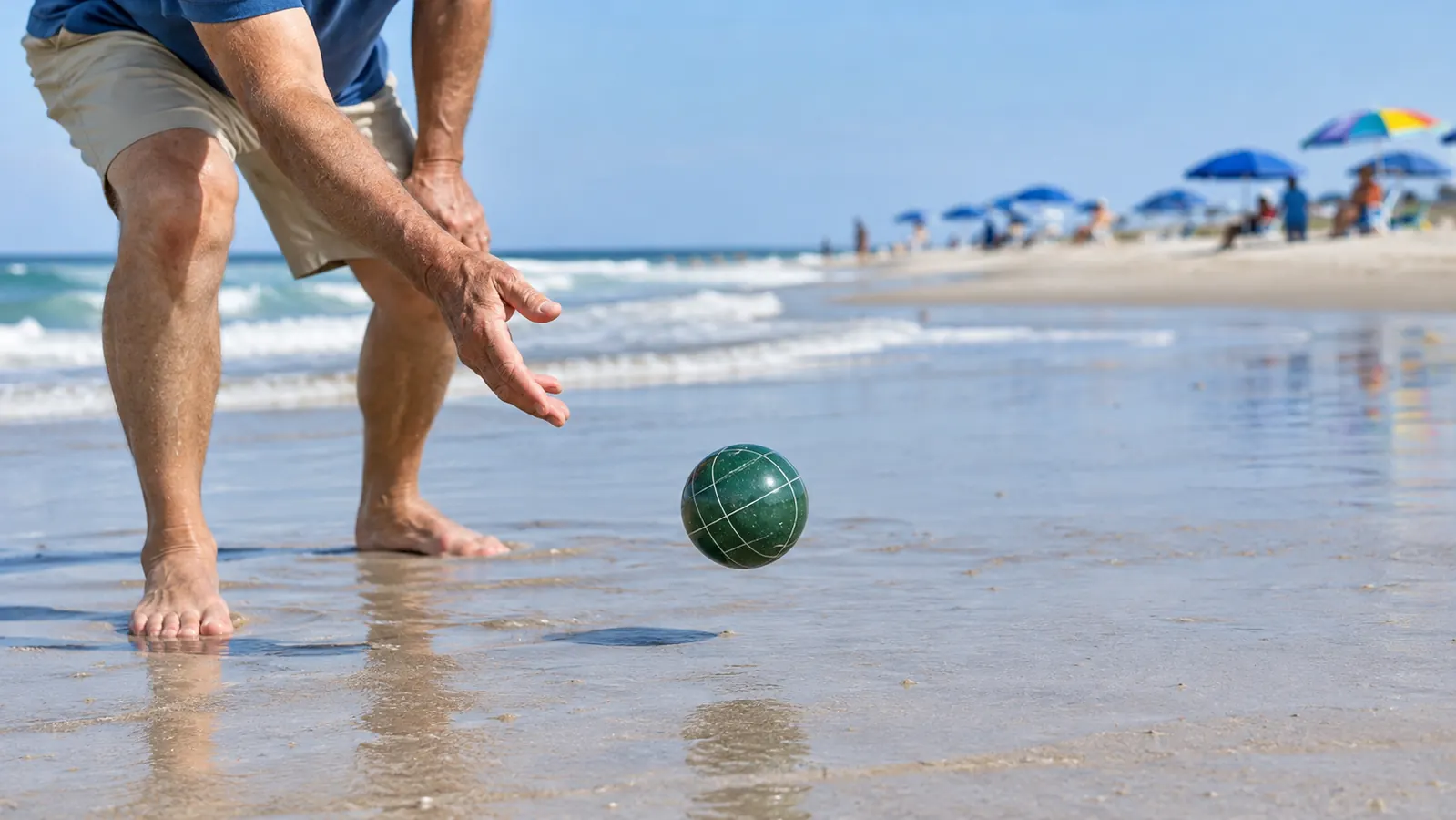
The single biggest mistake I made that first morning was setting up in the soft, dry sand above the high-tide line. It looked great, but every ball died on impact. Now I walk toward the water until the sand feels firm under my feet. At low tide, the wide, flat stretch near the waterline is perfect. It is also easier to walk on, which matters more every year.
Here is how I test a spot. I drop one of the GoSports balls from about waist height. If it bounces once and stays put, the sand is too soft. If it lands with a solid thud and barely sinks, you have found your court. I also look for a patch that is reasonably level from side to side. You can check by walking the length of the spot and looking back at your footprints in the wet sand.
Low tide is not strictly required. The same spot can work at mid tide if the beach is wide and flat. But the window of firm, level sand is biggest in the hour or two around low tide, so that is when I plan bocce. It also leaves the rest of the day free for swimming and digging.
Step 2: Lay Out the Court With Simple Markers
A regulation bocce court is 76 feet long and 10 feet wide, which is a lot of sand. For beach play, I cut that down to about 40 or 50 feet. Shorter courts keep the game in reach of the grandkids and make it easy to see every ball from one end. You can always lengthen it if the adults want a bigger challenge.
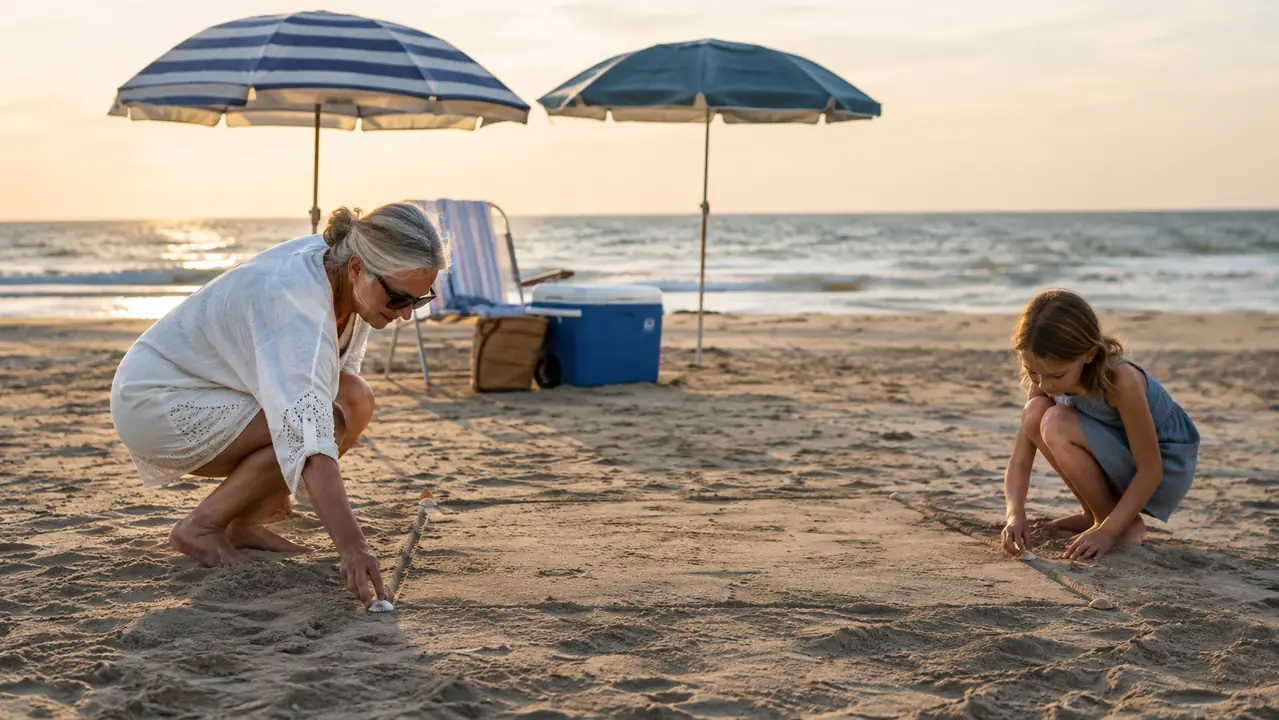
To mark the court, I use plastic picnic markers or small shells placed at the corners. Masking tape also works if you have a dry patch of sand, but shells are nicer because they wash off. I set two markers at each end to show the boundaries, and I keep a center line in my head rather than drawing one in the sand. The goal is a clear playing area, not a work of art.
At each end, I place the pallino line. That is just a spot about 10 feet from the end marker where the little target ball gets tossed. It gives everyone a consistent starting point and keeps the first throw from landing on top of the boundary. Once the markers are down, the court takes about two minutes to set up.
Step 3: Learn the Basic Throw Before You Split Teams
Bocce looks simple, and it is, but the underhand toss is worth practicing for two minutes. You want a smooth, low arc. Grip the GoSports ball with your fingers spread, step forward with the opposite foot, and release at about knee height. The ball should roll out of your hand, not bounce off the sand like a basketball.
The biggest beginner mistake is throwing too hard. On firm sand, a medium toss travels a long way. I tell the grandkids to aim for the pallino and let the ball die near it. You are not trying to smash the target. You are trying to land close, or knock an opponent's ball out of the way, which is where the fun starts.
Warm up with a few practice rolls before you choose teams. Toss the pallino, then take turns sending balls toward it. You will quickly get a feel for how much speed the sand takes off each roll. That feel is the whole game, and it comes back fast once you play a round or two.
Step 4: Play With House Rules That Keep Everyone Moving
The official rules are not complicated, but I use a slightly simpler version at the beach. One team tosses the pallino to start. Then the same team throws the first ball. After that, the other team throws until one of its balls is closer to the pallino than the first team's closest ball. Then the first team goes again, and so on. When all eight balls have been thrown, the team with the closest ball scores a point for every ball that is closer than the other team's best.
That sounds like a lot when written out, but it flows naturally after one game. For the grandkids, I simplify even further. Each team throws four balls, closest to the pallino wins the round, and we do not worry about scoring details. The important thing is that everyone is moving and nobody is standing around waiting for a turn.
A couple of beach-specific rules help too. If the wind moves the pallino, we leave it where it stops and play on. If a ball lands in a footprint or a kid's sand castle, we call it a lie and play it from there. The goal is a relaxed game, not a tournament. Save the strict rules for the lawn.
Step 5: Pack Up So the Set Lasts Years
Sand and salt are the two things that wear out beach gear. I do a quick clean before I put the GoSports set away. I wipe each ball with a damp towel, especially the one that rolled into the wet sand. Then I let everything air out in the sun for a few minutes while we pack the rest of the wagon.
I also check the pallino before we leave. It is small enough to disappear under a beach towel, and it is the one piece you cannot easily replace from memory. We keep it in a separate little pouch in the wagon, which has saved us more than once. When we get home, the set dries on the porch for an hour before it goes in the garage.
A little care makes the set last. Ours has survived three summers of sand, salt spray, and the occasional dunk in the surf. The GoSports balls still roll true, and the set still looks ready for another season. That is what I want from a beach game: gear that does not become another chore.
The Rule That Trips Up New Players
The part that confuses everyone at first is the order of play. New players assume teams take turns no matter what. In bocce, the team that is not closest to the pallino keeps throwing until it becomes the closest team. That is the whole rhythm of the game. Once you understand that, the strategy opens up. You are not just trying to get close. You are also trying to knock the other team's ball away, or nudge the pallino into a better spot.
The other rule worth knowing is that the pallino belongs to whoever threw it first. If it gets knocked out of bounds, the throwing team tosses it again. In our beach games, we keep it simple. If the pallino leaves the court, we put it back on the center line and keep playing. Nobody wants to stop a good rally for a technicality.
What Else Helps
A few extras make beach bocce even better. I bring a small hand towel for wiping balls and hands, because sunscreen and sand make a paste that gets on everything. A lightweight folding chair at each end of the court gives older players a place to sit between turns. And I always set up with the sun behind us when I can, so nobody is squinting into the glare on every throw.
If the wind is strong, I shorten the court by ten feet rather than fighting it. The game stays fun, and the balls stay on the sand instead of veering off. I also bring a spare set of markers in the wagon, because the grandkids like to rearrange them into their own game once bocce is over.
One last thing: bring extra water. Bocce does not feel like exercise until you have walked the length of the court twenty times. The game sneaks up on you in the best way.
The biggest mistake is setting up in soft, dry sand. Once I moved the court to firm, level sand near the water at low tide, the GoSports balls rolled true and the grandkids stayed for an hour.
Ready to put a GoSports set in your beach bag?
I have used mine for three summers and it still rolls true. If you want a game the whole family can play without a rulebook, this is the set I would pack.
Amazon Check Today's Price on Amazon →