
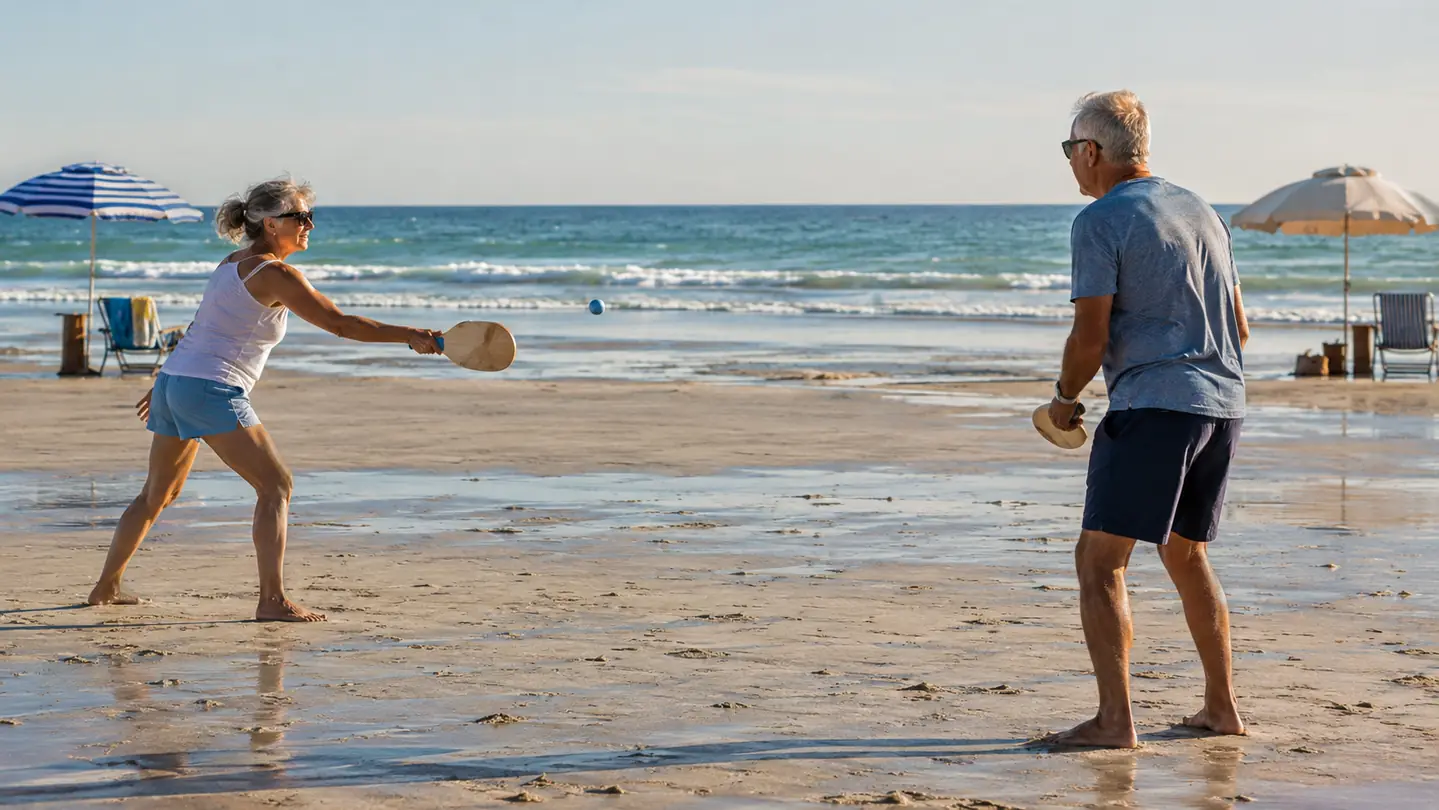
Every summer at the Jersey Shore, the same question comes around by mid-morning. We have unloaded the wagon, planted the two umbrellas, and parked the cooler in the shade, and somebody wants to know what we are going to do with ourselves. The water is cold until July, the sand is hot by noon, and the grandkids can only build so many sandcastles. For us, the answer has been the same for years: beach paddleball. The set that has lasted through every one of those summers is the Sport Design Pro Kadima Paddleball Beach Set.
I say lasted on purpose, because the first set we bought did not. The paddles were light plastic, the ball went wherever the wind wanted, and by the third day one of the rubber bands had snapped. Walt wanted to give up on the whole idea. What turned it around was getting a set built for the game instead of for the toy aisle. The Pro Kadima feels different in your hand the first time you pick it up, and that difference shows up in how fast you learn. This guide covers the basics we wish someone had walked us through that first summer: where to set up, how to hold the paddle, and the simple rules that turn a few lazy hits into an actual game.
The Set That Ended Our Search for a Beach Game
The Sport Design Pro Kadima Paddleball Beach Set is the one we keep in the wagon all summer. See today's price on Amazon and have it ready for your next trip to the sand.
Amazon Check Today's Price on Amazon →What Makes the Pro Kadima Different
Before the steps, it helps to know what you are holding. The Pro Kadima set comes with two paddles and a ball, and the whole game is built around hitting that ball back and forth on a flat stretch of sand. No net to set up, no poles, no court to draw. That simplicity is the point. You can play a serious rally in the morning and a lazy game with someone who has never held a paddle after lunch, using the same two paddles.
What I appreciate most after a full summer of use is that the paddles feel solid without being heavy. The handles fit a normal grip, the face of the paddle is wide enough that you do not need perfect aim to make contact, and the ball has a weight that carries nicely in the air. It does not blow away the second you set it down, and it does not bounce off the paddle like a rock. Those details matter more than any fancy feature, because they are the difference between a game that frustrates you and one you keep coming back to.
Step 1: Find Flat Sand and a Little Wind Shelter
The biggest mistake people make is setting up in the soft, dry sand above the tide line. The ball bounces dead, your feet sink, and every shot dies at your ankles. Instead, look for the wide, flat stretch near the water at low tide, the kind of sand that is damp enough to hold your footprint but dry enough to sit on. That surface gives you a true bounce and keeps both players moving without fighting the ground.
Wind matters almost as much as the surface. On a breezy day, the ball drifts toward the ocean or the dunes no matter how cleanly you hit it. We set up so the wind crosses us sideways instead of blowing straight into one player's face. That way the ball gets pushed toward the middle of our little playing area instead of sailing past one of us. If the wind is truly strong, we move closer together and take something off our swings.
One more thing about picking a spot: give the people around you some room. A stray ball travels farther than you think, and nobody wants a rally landing in their lunch. We set up at least twenty feet from the nearest blanket and angle our playing area along the shoreline, so a missed shot heads toward open sand instead of the crowd.
Step 2: Get a Comfortable Grip and Stance
Hold the paddle the way you would hold a frying pan or a ping pong paddle, with the handle resting across your palm and your fingers wrapped around it. Keep your wrist loose. The natural instinct is to grip the handle hard and swing from the shoulder, and that is exactly what sends the ball flying over the next family's blanket. The paddle does the work, so let it.
Stand with your feet about shoulder width apart, knees slightly bent, and the paddle held out in front of you at waist height. Most people start with the paddle too low or too far back, which turns a simple rally into a series of desperate lunges. Keep the paddle in front of you and track the ball with your eyes, not your feet. You will be surprised how little movement a good rally actually takes.
It also helps to practice the grip before the ball is involved. Stand on the sand, hold the paddle out in front of you, and make small circles with your wrist. That motion is the whole swing. Once it feels natural, the actual hitting is just timing.
Step 3: Start With a Soft Toss and One Bounce
Here is the rule that makes paddleball easy to learn: the first hit can be a toss and a bounce. One player starts by tossing the ball a few feet into the air, letting it bounce once on the sand, and then hitting it gently to the other player. That one bounce takes all the panic out of the first contact. You are not trying to hit a moving target out of the sky. You are waiting for the ball to come to you.
The other player does the same thing on the return, letting the ball bounce once before hitting it back. Once you have traded a few of those soft bounces, you will naturally start taking the ball out of the air. That is the moment the game clicks. The bounce rule is not a crutch, it is how the game builds itself. We still use it on windy days and whenever we are teaching somebody new.
Step 4: Keep the Rally Alive, Then Add Counting
The simplest way to play is to keep the ball going. Hit it to your partner in a gentle arc, they hit it back, and you count each clean hit out loud. Our family record on a calm morning is somewhere in the seventies, and the counting is half the fun. It gives everyone a target to beat and turns a casual hit around into something the grandkids actually get competitive about.
You can agree on one bounce or no bounces before you start. We usually let the ball touch the sand once for the first few rallies of the morning, then tighten it to no bounces once everybody is warmed up. When a rally ends, the player who missed starts the next one, which keeps things fair. If you want a number to play to, first to twenty clean hits wins, with the count starting over after every miss. That sounds easy until the wind picks up.
On windy days, the counting game gets a house rule. We give the player hitting into the wind one extra step forward, or we simply take pace off the shot so the ball does not sail. The point is to keep the rally alive, not to punish the person fighting the breeze.
The Sport Design Pro Kadima is the set that has lasted summer after summer in our beach bag, and it still plays the way it did on day one.
Step 5: Add a Few Rules That Make It a Game
Once the rally feels natural, you can add a few rules that make paddleball more interesting without making it complicated. The first is a boundary. Pick two landmarks, a sandal and a cooler work fine, and agree that the ball has to land between them. Shots that land outside the line count against the hitter. That single rule eliminates the wild swings and keeps both players honest.
The second rule is the serve. The player starting the point tosses the ball, lets it bounce once, and hits it to the other side. From there the rally continues until someone misses. You can also play doubles with four players, which is our favorite way to include the grandkids. The same rules apply, just with more people watching the boundary and more laughter when two players go for the same ball.
If you are playing with people of very different skill levels, the stronger player can use the soft arc and the weaker player can take the ball on one bounce. That keeps the rally going and gives everyone a real hit. We have used that approach since the grandkids first joined us, and it is the reason they ask to play.
Three Mistakes We See on the Beach
The first is setting up with the sun in someone's eyes. The player facing the glare cannot track the ball, and the rally dies in two hits. Take ten seconds to look at where the sun is and set up so it is over your shoulder or behind you both. It makes an enormous difference.
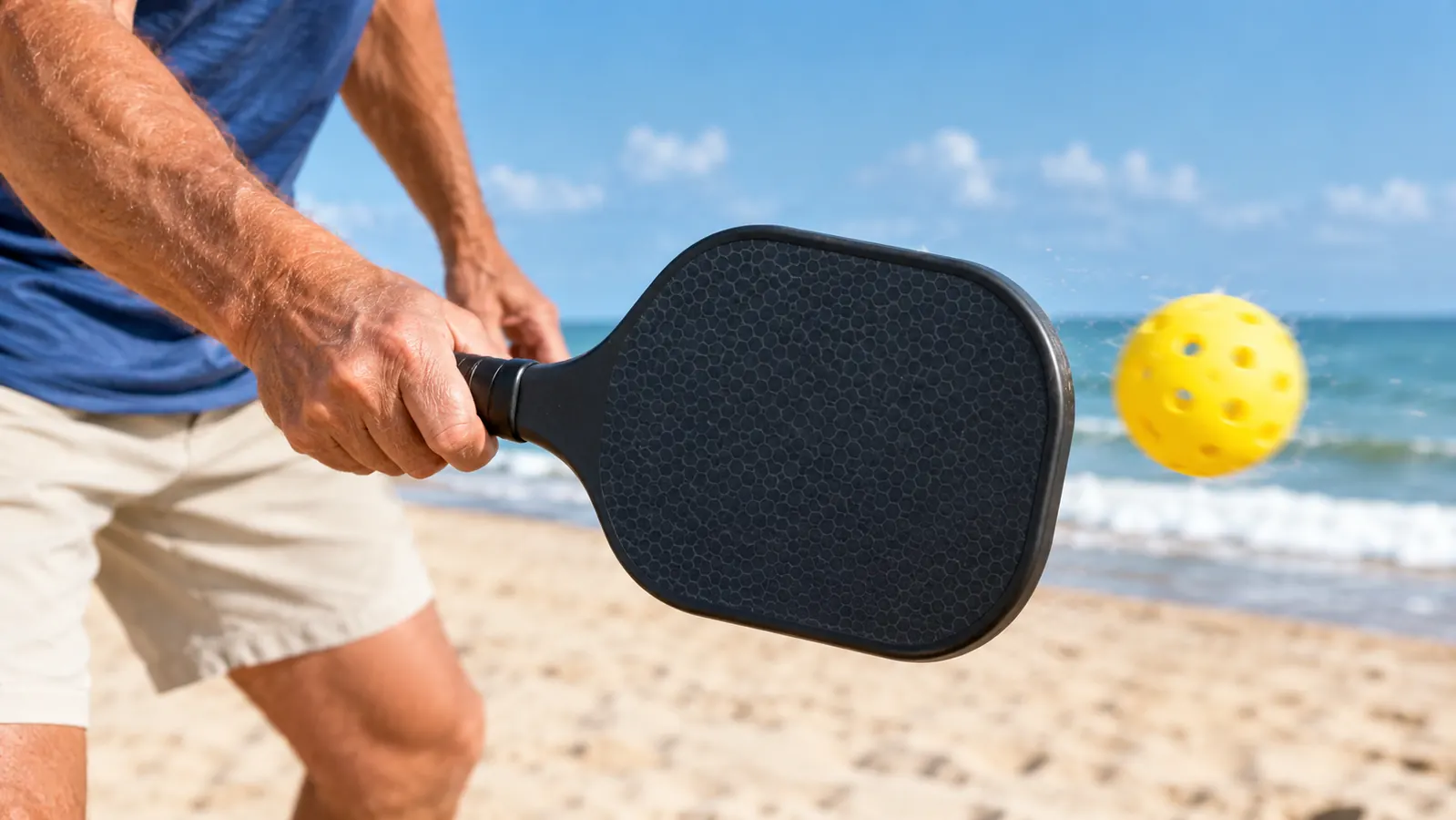
The second is swinging hard at a ball that does not need it. The Pro Kadima ball is light, and the paddle face is generous. A smooth, short swing sends it where you want. A big swing sends it sideways, usually toward the nearest blanket. Let the paddle do the work and keep your feet still.
The third is packing it in the moment the wind picks up. Wind is part of beach paddleball. Move closer together, use the one bounce rule, and take pace off your shots. Some of our best rallies have happened on breezy afternoons when we stopped fighting the weather and started playing with it.
What Else Helps
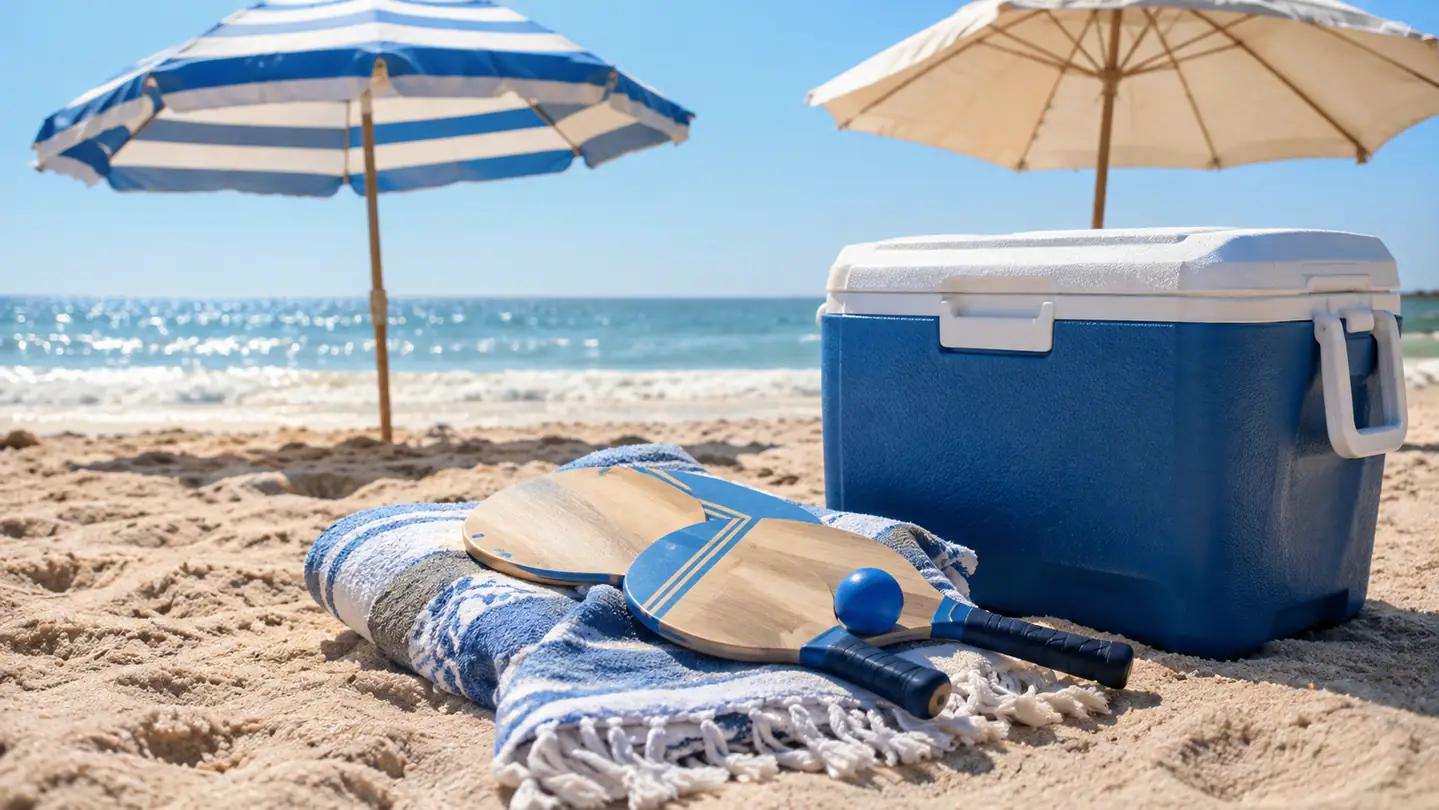
A few extras make the game better, and you probably already own all of them. Sunscreen is the obvious one, because you will look up at the ball more than you expect. A hat with a brim helps you track the ball against the sky. And a bottle of water for each player, because a twenty minute rally works up more of a sweat than it looks like. We keep all of it in the wagon next to the Sport Design Pro Kadima.
The other thing that helps is a backup plan for the wind. On days when the breeze will not cooperate, we move the game closer together and use the one bounce rule. Or we switch to a solo drill where each player hits the ball straight up and counts how many times they can keep it in the air. That drill is better than it sounds, and it is the fastest way we have found to get a feel for the paddle.
How We Keep It Fun for Every Age
What I love about this game is that it scales. The grandkids can play a serious counting match with Walt in the morning, and after lunch the same two paddles work for a gentle rally where the only goal is keeping the ball in the air. Nobody keeps score, nobody gets frustrated, and the game ends when somebody wants a snack from the cooler.
For older players, paddleball is one of the friendliest games on the beach. It does not require sprinting or jumping. The motion is mostly in the wrists and forearms, and you set the pace yourself. I have played with my shoulder acting up and simply taken softer swings. The ball comes to you, and you decide how hard to send it back. That is why it suits retirees so well, and why we keep a set in the wagon all season.
Pack the Same Set We Do
The Sport Design Pro Kadima Paddleball Beach Set has been in our wagon all summer, every summer. Check today's price on Amazon and have it ready for your next trip to the sand.
Amazon Check Today's Price on Amazon →