
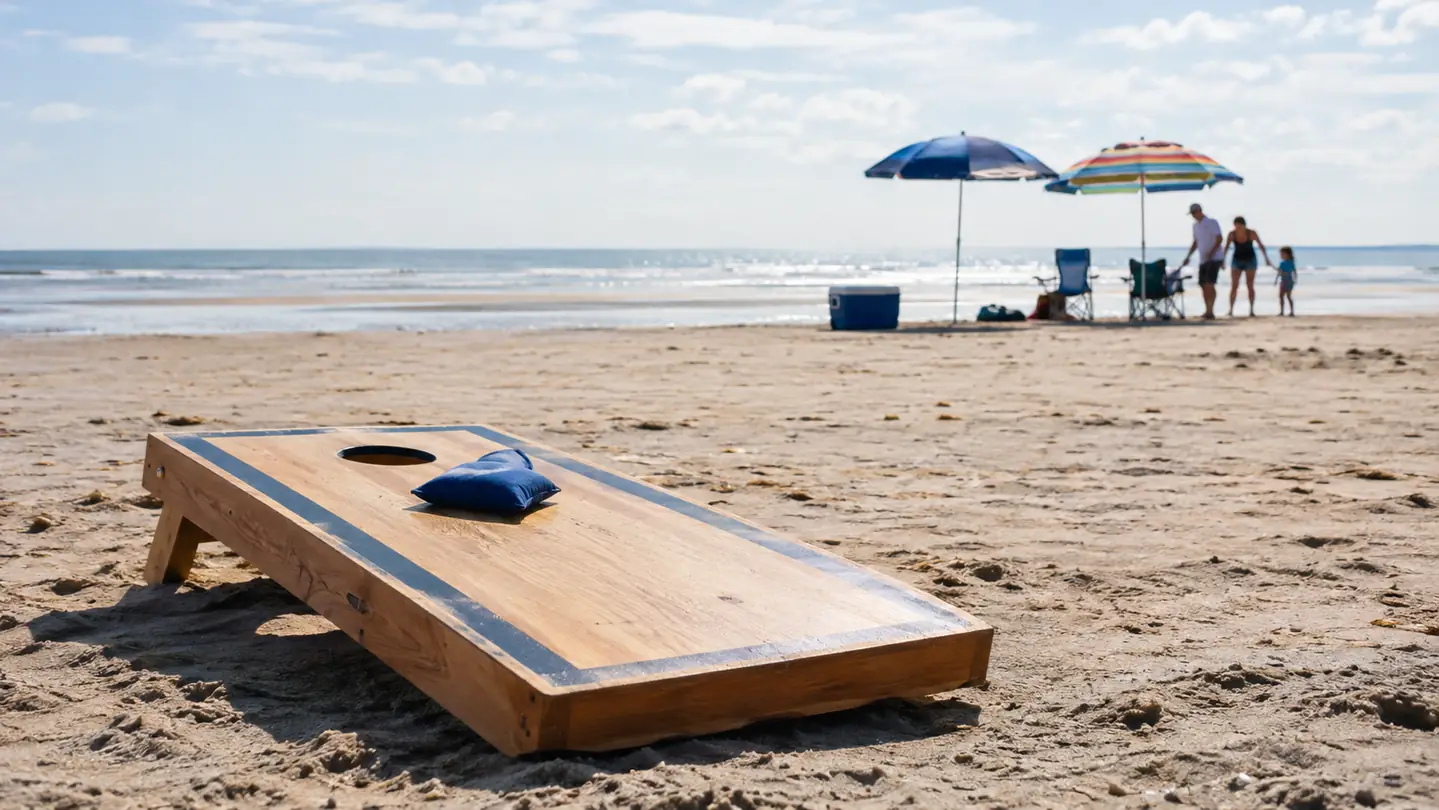
The first time we carried a wooden cornhole set down to the beach, it lasted about one game. The boards slid on the sand, the legs sank into the soft spots, and by the second round the bags were damp enough that they flew like wet socks. We packed it back in the wagon and went back to the umbrella. That is the thing about beach games: the sand is the whole challenge. A game that works fine on a lawn can fall apart ten feet from the water. The boards wobble, the bags pick up grit, and the wind does things you never notice in the backyard.
The GoSports Classic Portable Cornhole Board Set is the one we keep in the wagon now. It folds flat, comes with eight bean bags and a carry case, and sets up in about a minute on packed sand. Walt and I play it with the grandkids on wide, flat sand near the water at low tide, and it holds up to wind, salt and sandy hands better than any set we have tried. Here is how we play, step by step, including the small details that keep the boards from sliding mid-game and the bags flying straight.
A Cornhole Set That Stays Put on Sand
The GoSports Portable set is the one we reach for on beach days: fold-flat boards, eight bags, and a carry case that fits in the wagon. It sets up in about a minute and holds up to sand, salt and wind.
Amazon Check Today's Price on Amazon →How We Set Up and Play on the Sand
Step 1: Find the Right Spot on the Beach
Where you set up matters more on sand than it does on grass. We look for a stretch of flat, packed sand near the water at low tide, where the waves have smoothed the ground. Loose, dry sand near the dunes is too soft. The boards sink, the legs shift, and every throw becomes a guess. If the sand is firm enough to leave a shallow footprint but not a deep one, that is the spot.
Give yourself room. We set the boards front edge to front edge at the full 27 feet for adult games, so the whole court is about 30 feet long with a little walking space at each end. That means we need a clear patch of beach roughly 12 feet wide. On a crowded July afternoon, that usually means walking a little farther down the beach instead of setting up right in front of the cottage. It is worth the walk. A cramped court turns a friendly game into a scramble.
Check the wind before you commit. Onshore wind fights your throws, and afternoon sea breezes at the Jersey Shore get stronger as the day goes on. We like the wind coming across the court rather than straight at us. We also keep the sun at our side instead of in our eyes. A bag you cannot see is a bag you cannot catch, and squinting into the glare makes every toss a guess.
Step 2: Set Up the Boards on Sand
The GoSports boards fold flat for the wagon and open up with legs that lock into place. Open both boards, set them down, and check the distance before you settle anything. Regulation distance is 27 feet from the front edge of one board to the front edge of the other. For the grandkids we shorten it to about 15 feet, which keeps the game fun and lets them practice their aim without straining. You can always move the boards closer for the little ones and push them back out for the adults.
The sand needs a little prep that a lawn never does. Scrape a shallow, level bed with the side of your foot, then set the board down and press it into the sand until it feels solid. If one corner rocks, shift the board and press again. On packed sand near the water, the boards stay put for the whole game. In softer sand, we press them in a little firmer and check them again after the first round. It takes thirty seconds and saves a lot of reaching.
A quick word about the top of the board. Sand blows onto everything at the beach, and a gritty board slows the bags down. We wipe the surface with a hand towel before the first game and again between rounds if the wind is kicking up. It takes five seconds and keeps the bags sliding true. The same towel dries the bags when they pick up damp sand, so we keep it within arm's reach the whole game.
Step 3: Learn the Basic Rules
Cornhole is simple enough for the grandkids and competitive enough for the adults. Two players or two teams of two. Each side has four bags. Teams take turns throwing, alternating bags, until all eight are on the board or on the sand. Then you walk to the other end, count the score, and throw back the other way. The game moves back and forth like that, one round at a time.
Scoring is where people get confused, so here is the short version. A bag that drops through the hole counts 3 points. A bag that lands and stays on the board counts 1 point. A bag that touches the sand first counts nothing, even if it slides up onto the board. After each round, the scores cancel out. If one team scores 5 and the other scores 2, the leading team gets 3 points for that round. Only one team scores per round, which keeps the game close and the scoreboard simple.
We play first to 21. Some folks play that you have to win by 2, but with the grandkids we keep it simple and play straight first to 21. A game usually runs about 20 minutes, which is just right for a beach day. Then someone wants a rematch, and that is part of the fun. If the kids are losing badly, we quietly shorten the game for them. Nobody has to know the score went from 21 to 15.
Step 4: Throw the Right Way on Sand
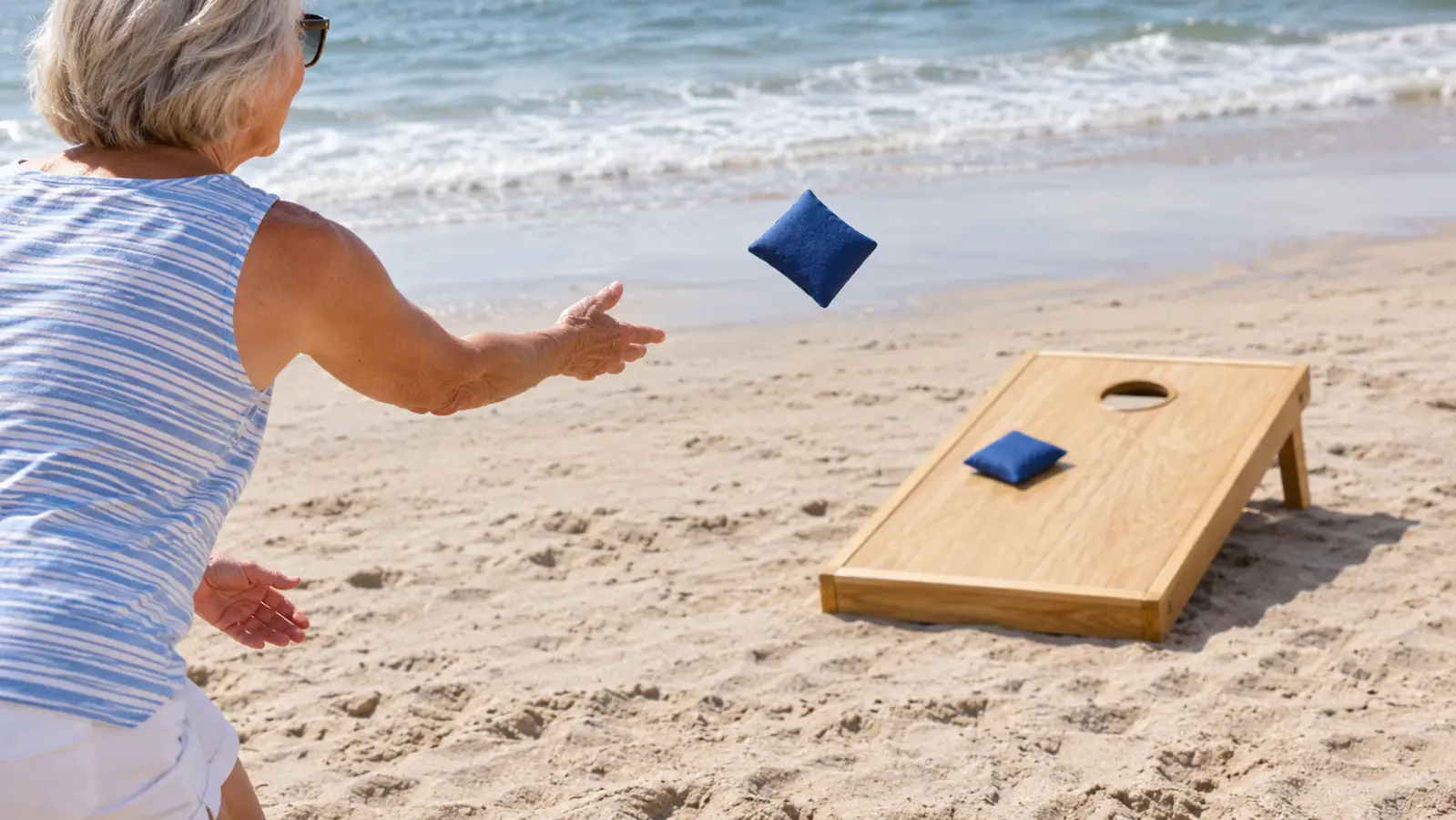
The throw is an underhand toss, not a heave. Hold the bag with your thumb on top and your fingers underneath, bring your arm back, and release with a flat, smooth motion. A little spin helps the bag land flat on the board instead of skidding off. Walt and I both throw with a modest arc, which is easier on the shoulder than a hard flat toss. At 64, I care about that. The grandkids throw however they like, and half the time it works anyway.
Sand changes the bags. The GoSports bags pick up grit the minute they touch the sand, and a gritty bag grabs the board instead of sliding. We brush each bag off with a thumb before throwing. If the bags get damp, they fly heavier, so we keep the towel handy and give them a quick wipe between rounds. A dry, clean bag is the difference between a bag that drops in the hole and one that stops two inches short.
Your footing matters too. Sand shifts under your feet, so plant both feet before you throw and take a small step into the toss. The grandkids like to run up and throw, which is fine for them. For older knees, a steady stance and a short step is easier on the joints and just as accurate. We also make sure nobody throws until the other team is clear of the court. A bean bag to the ankle is a quick way to end a beach game.
Step 5: Keep the Game Going (and the Bags Dry)
The tide is the clock. At low tide, the flat sand near the water is perfect for a court. But the tide turns, and the water creeps back in faster than you expect. We set the boards far enough up the beach that we can finish a game without moving, and we always check the water line before starting the next round. Nothing ends a good game faster than a wave running under the boards.
Wind is the other thing to watch. A strong gust can lift a bag mid-flight or slide a board on loose sand. If the wind picks up, we turn the court slightly or move the whole setup a few feet closer to the dunes. It takes a minute and beats chasing a bag into the surf. On very windy days, we skip the full court and play closer together, which keeps the game going instead of ending it.
When the game is over, brush the sand off the boards, fold the legs, and put everything in the carry case. The whole set fits in the wagon next to the cooler and the umbrellas. That is the part the grandkids like best: the game goes away as fast as it came out, and we are back at the water in two minutes. The boards have survived a full summer of sand, salt and the occasional spilled lemonade, and they still fold up clean.
What We Learned the First Few Times
The first beach game taught us to keep the bags dry, but the second one taught us to keep the score simple. We tried to track every bag individually and it took longer than the game itself. Now we just count the score at the end of each round and move on. The grandkids keep the running tally in their heads, and they are usually right.
We also learned not to set the boards too close to the water, even at low tide. A wave that looks small from the blanket can reach a lot farther than you think. And we learned to put the carry case somewhere it will not get buried under the towels. Nothing disappears faster at the beach than a case sitting in the sun.
What Else Helps
A small hand towel is the single most useful extra. It wipes the boards, dries the bags, and cleans sandy hands between throws. We keep one tucked in the wagon all summer. A spare set of bags is the next best thing, especially with the grandkids, because bags wander off between games.
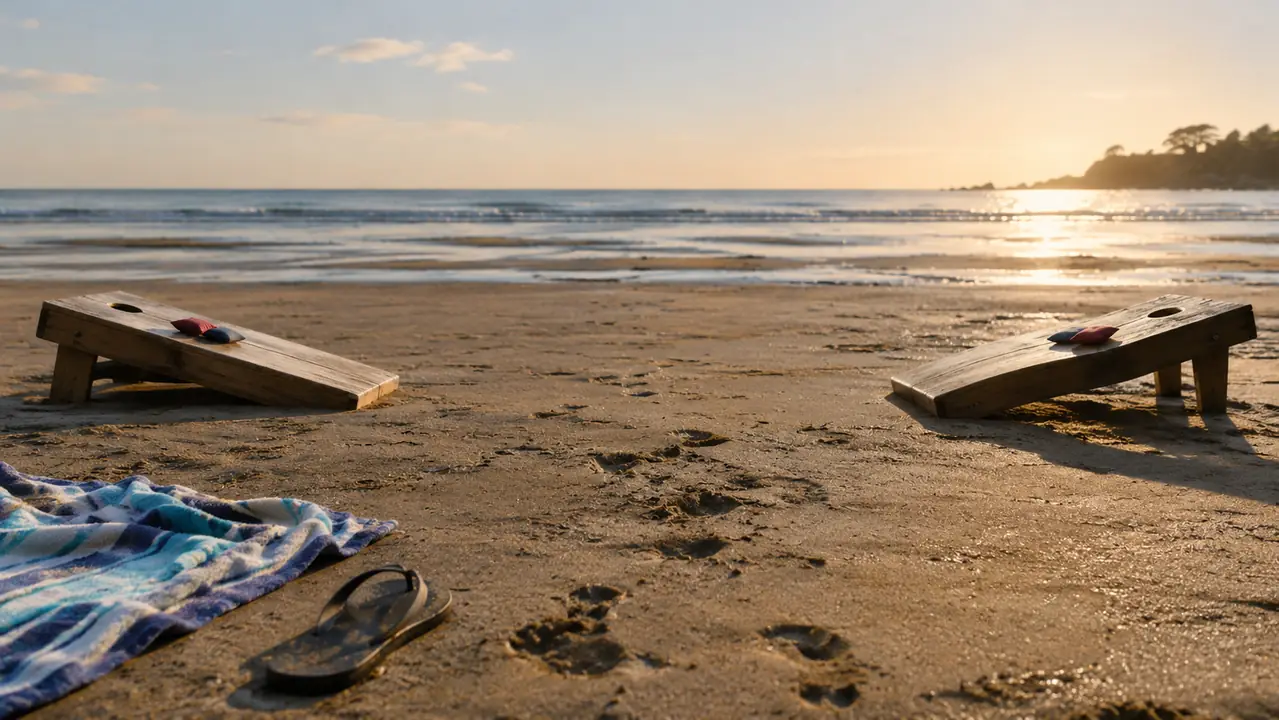
Two more things make the game better. A phone level tells you if a board is tilting, which is handy on sand that looks flat but is not. A pair of flip-flops set at the throwing line makes a good marker, so everyone throws from the same spot. If you want the game to last longer, play a few rounds before the afternoon wind picks up. Mornings at low tide are the calmest time on our stretch of beach, and the sand is at its smoothest then.
One last note: keep the court away from the path between the water and the umbrellas. Half the beach will want to walk through your game, and you will spend more time waiting than throwing. A spot near the water's edge at low tide keeps the foot traffic down and the game moving.
We played three full rounds on a windy August afternoon, and the boards did not move more than an inch.
Pack the GoSports Set for Your Next Beach Day
If you want a beach game that holds up to sand, salt and wind, this is the one we keep in the wagon. It sets up in a minute, plays all afternoon, and packs away before the tide turns.
Amazon Check Today's Price on Amazon →