
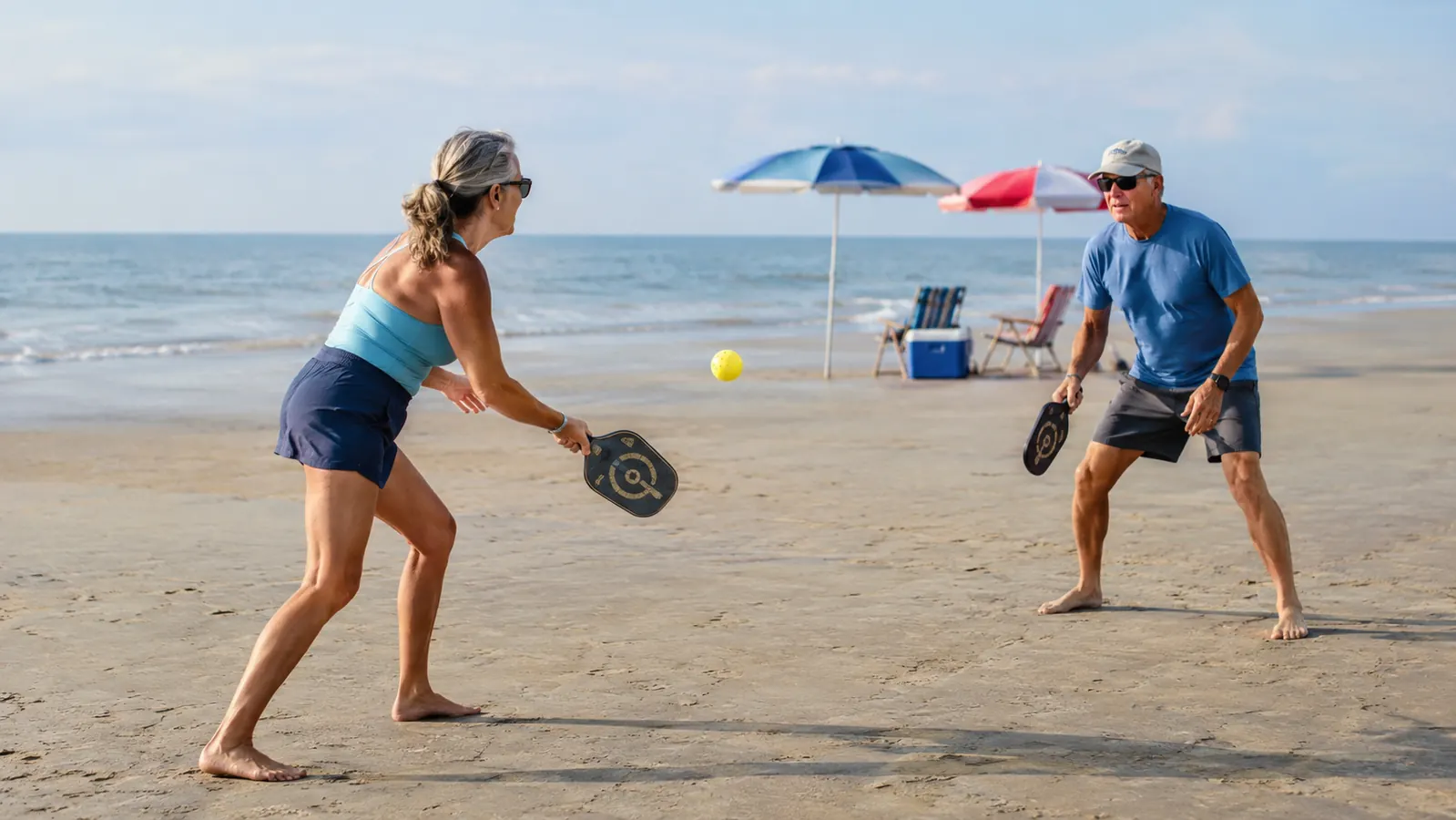
Every June I unpack the same beach bag: sunscreen, a good book, and the honest hope that this summer I'll get more exercise than the walk from the wagon to the water. Last summer I finally did something about it. I ordered the Pro Kadima Paddleball Beach Set from Sport Design, and it has spent more time in my hands than any other piece of gear I own. That surprised me, because paddleball looked deceptively simple when I bought it. I am not a natural athlete. I am a retired school librarian who spent forty years with a book in her hand, and the last thing I expected was to become the person who talks other retirees into playing paddleball at nine in the morning.
This is the review I wished I had before I ordered. Not the cheerful product page version, and not the one-star rant from someone who tried to play in a gale. I am 64, I play on the same stretch of wide, flat sand near the water at low tide, and I have now played this set through a full Jersey Shore summer, including three weeks in July when the grandkids were here. Here is what I have learned, including the parts nobody tells you.
The Quick Verdict
A well-built paddleball set that earns its place in the beach bag, as long as you understand it needs flat sand and calm wind. I reached for it more than any other game this summer.
Amazon Check Today's Price →A paddleball set that still works after a full summer of salt, sand, and sun
The Pro Kadima from Sport Design has been my morning companion since June. If you want a two-person game that is easy on the shoulders and actually holds up on the beach, this is the one I kept reaching for.
Amazon Check Today's Price on Amazon →How I've Used It
Walt and I play most mornings around 9, right after the tide starts going out. The sand near the water is packed and flat, which matters more than you would think. We have played in everything from a dead-calm morning to a day when the flags were standing straight out, and the difference is night and day. We set up about fifteen feet apart, though we stretch to twenty when I am feeling ambitious. A typical game lasts twenty-five to forty minutes, and I am always surprised by how quickly it goes. You are not running. You are mostly stepping, reaching, and getting your heart rate up without pounding your knees.
When the grandkids arrived in July, I expected the set to be abandoned in favor of their phones. Instead, the ten-year-old claimed it before breakfast and talked her brother into a tournament that lasted most of the afternoon. The game has a low enough learning curve that kids can rally within a few minutes, but enough skill involved that adults do not get bored. That combination is rare in beach gear. Most games are either too simple for grown-ups or too fiddly for children.
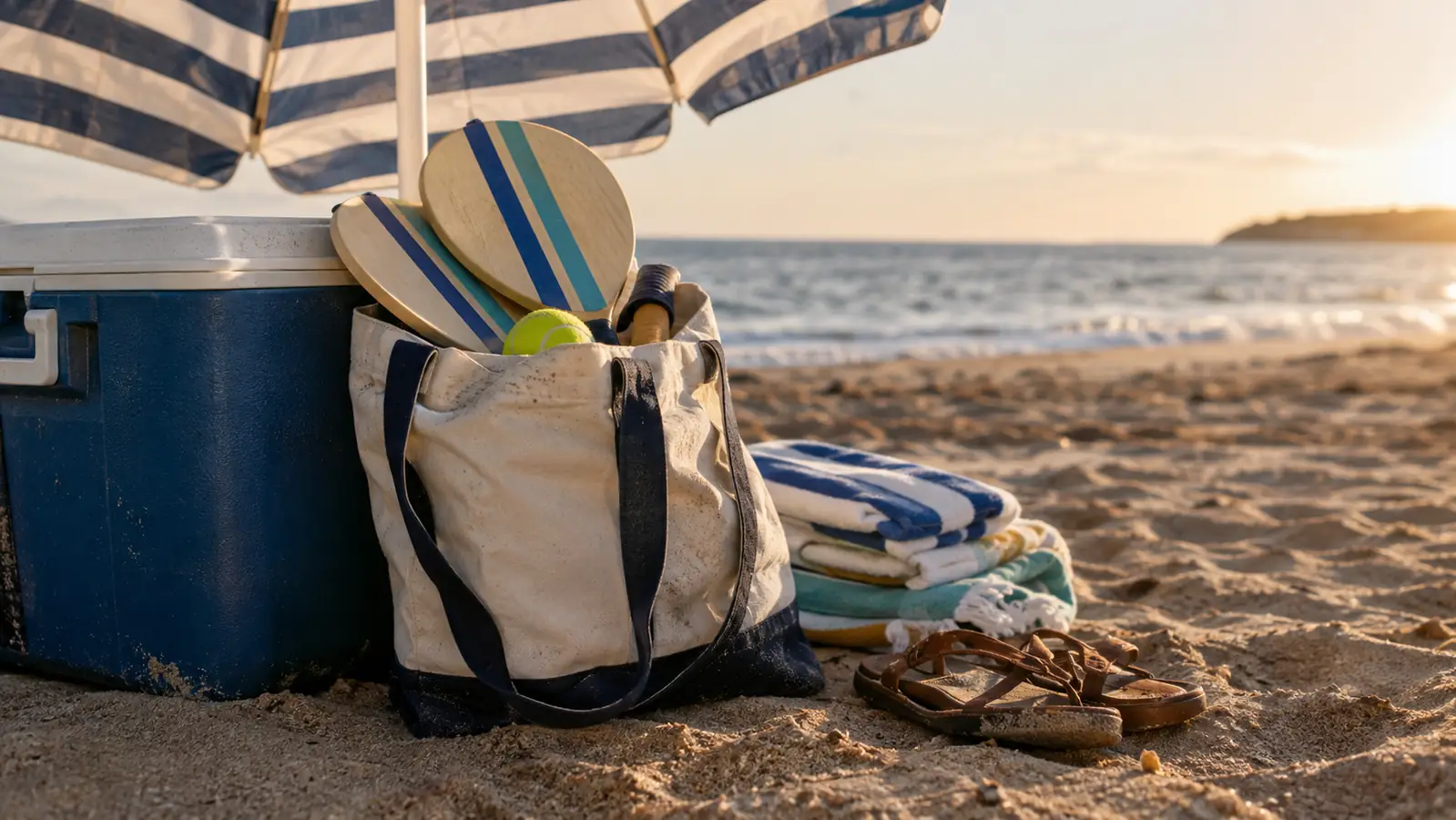
The set has also traveled. It has been in the wagon to the far end of the beach, propped against the cooler during lunch, and left in the sun for hours while we swam. The carry bag has sand in the zipper and the bottom of it now, but everything still works. One afternoon a wave came up higher than expected and soaked the bag. I emptied it, dried the paddles in the sun, and the set was ready again the next morning.
We have a routine now. Walt pulls the wagon down to the packed sand, I set up the chairs so they face the game rather than the water, and we play until my shoulder tells me it is time to stop. That usually happens around the twenty-five minute mark. The nice part is that the set is so simple to set up that the whole thing takes less than a minute from bag to first hit.
What Nobody Tells You Before You Buy
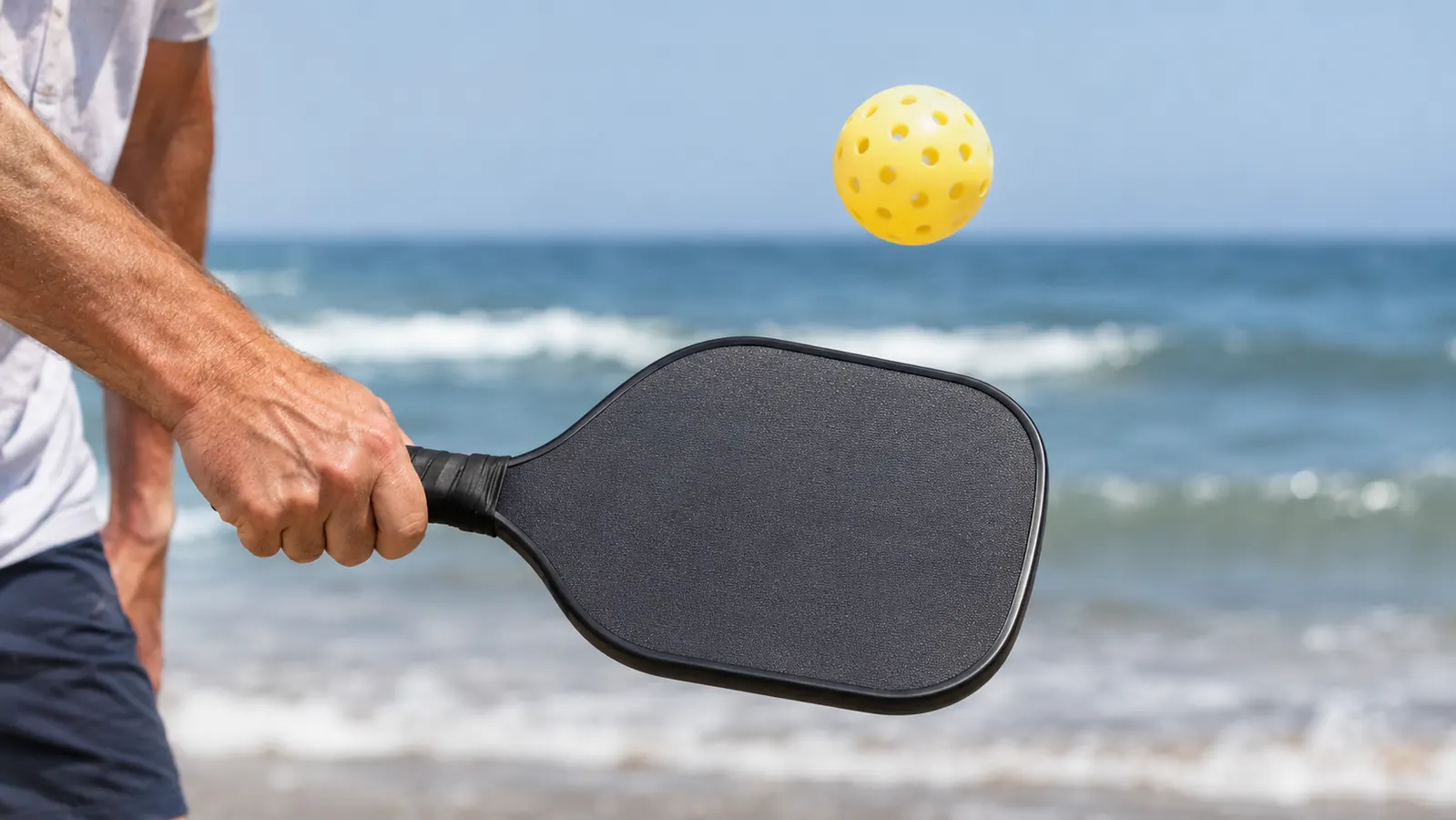
The first thing nobody tells you: the wind is the real opponent. On a calm morning, the ball does exactly what you expect. On a breezy afternoon, it curves, stalls, and drops at your feet. I lost count of how many times Walt and I chased a ball that the wind carried sideways into the next family's towel setup. This is not a flaw in the set. It is a fact of paddleball. But if you buy this expecting to play comfortably in an afternoon sea breeze, you will be frustrated.
The second thing: sand will get on everything, including the ball. The ball picks up grit, and grit on the ball against the paddle face makes a scraping sound that takes some getting used to. The sound bothered me for the first week. Now I barely notice it, and it has not affected how the paddle plays. You will want to brush the ball off between games. The trick I learned is to keep the ball in the bag, not sitting on the sand, when we take a break.
The third thing is the one I feel strongest about: you need flat sand. The product photos make it look like you can play anywhere. You cannot. Loose, dry sand swallows your footing and makes the ball die when it hits. We play at low tide on the packed strip near the water, and the experience is completely different. If your beach does not have that kind of surface, this game will disappoint you.
And the last thing: it takes about ten minutes to get the feel for the paddle. The ball comes off the face faster than you expect. My first few games were mostly whiffs and wild sends. By the second session, Walt and I were having real rallies, and by the end of the first week we could keep a point going for a satisfying stretch. If you have played tennis or ping-pong, you will pick it up faster. If, like me, you have played neither since high school, give yourself two sessions before you judge it.
How the Set Holds Up Over a Summer
I have been hard on this set. It has been rained on, left in direct sun, dropped in the sand, and played with by children who are not gentle. The Sport Design paddles have held up better than I expected. The faces show wear from a summer of contact with the ball, but there are no cracks, no splintering, and no loose edges. The edges have a little sand scuff, which I consider honest patina on beach gear.
The ball is the part I worried about most, because beach balls are usually the first thing to fail. After a full summer, ours is still round and still bounces. It has lost a little of its new-ball spring, but not enough that I noticed until I compared it with the spare. The set includes an extra ball, which I thought was unnecessary until I watched the grandkids hit one into the surf. That spare saved the afternoon. I am careful to dry the ball off if it goes in the water, and I suspect that helps. Salt water left to dry on a ball is how beach toys die.
The bag is the weakest part, and I will be honest about that. It is a simple drawstring style, and the drawstring is thin. Sand works its way into the bottom no matter what you do. After three months the bag is functional but tired, and I would not be surprised if I replace it next season with a small mesh tote. That feels like a minor complaint about an otherwise solid set, but it is the kind of detail that only shows up with time.
The stitching on the paddle grips has held. I read a few reviews before buying that mentioned grip comfort, and I was prepared to add tape. I have not needed to. The handles are smooth but not slippery, and even after a twenty-minute game in the sun, my hand does not slide around. That is a small thing until it is not.
After a full summer, the paddles have no cracks and the ball is still round. That is more than I can say for most beach gear I have owned.
The Real Tradeoffs
Nothing about this set is a problem if you understand what it is. It is a two-person game. You cannot play it alone, and a third person mostly watches or waits for a turn. Walt and I are lucky that we are a natural pair for it. Most of the time it is just the two of us, so the two-person limitation never bothered us. I mention it only because I have seen families buy this expecting a group activity. If your family expects everyone to play at once, this is not that game. The grandkids solved it by taking turns and keeping score, but adults who all want to play at the same time should know the limitation.
The other tradeoff is space. A comfortable game needs a stretch of sand about thirty feet long and fifteen feet wide, and it needs it to be flat. On a crowded July weekend, that space is hard to find. We played most of our best games early in the morning or late in the afternoon, when the beach was emptier. If your only beach time is the busy middle of the day, this set will spend more time in the wagon than in your hands.
There is also the chasing. Every paddleball game ends with a ball that got away. Sometimes it rolls into the water. Sometimes it lands under someone's chair. The Sport Design ball floats, which I am grateful for, but you will still do more walking to fetch than you might expect. I came to think of it as part of the exercise.
One more honest note: this is not a workout in the gym sense. You will not build muscle or work up a heavy sweat unless you play hard for a long time. What it gives you is something better for a beach morning: gentle movement, a little laughter, and a reason to stand up out of the chair. For us, that has been exactly right.
How It Compares to the Rest of Our Beach Bag
Walt and I own the usual collection of beach games. There is a cornhole set that spends most of its time in the car because the boards are too heavy to cart down the sand. There is a bocce set that the grandkids love, but it needs a long, clear stretch of sand and it ends every game with someone arguing about measurement. And there are two cheap wooden paddles with a rubber ball that we bought at a souvenir shop years ago, which warped by the second week.
The Sport Design set sits in a different category. It gives us the same back-and-forth satisfaction as the souvenir paddles, but it plays properly. The paddles have a real face to them, and the ball behaves. It is lighter to carry than cornhole, it does not need the measuring debates of bocce, and it survives contact with the sand. In our beach bag, that has made it the default choice.
That is the honest test, I think. Not whether a game looks fun in a photo, but whether it is the one your hand reaches for when the morning is calm and the sand is flat. This summer, that was the Kadima set more often than anything else we own.
Tips That Made It Work for Us
A few things made the difference between a set that gathered sand in the corner and a set we played every morning. First, we play at low tide. The window of good sand lasts about two hours after the tide turns, and we have learned to plan around it. Second, we stand so the wind is at our side rather than blowing straight at one player. That keeps the ball from sailing over the cooler.
Third, we brush the ball off before each game. It takes ten seconds and it keeps the paddle faces smooth. Fourth, we take the set out of the bag before we leave the beach and shake it over the sand. That one habit has kept the drawstring from jamming as much as it might have.
And fifth, we taught the grandkids the one rule that matters: nobody chases a ball that rolls toward the water until the rally is over. That rule saved a lot of wet socks and at least one ball.
What I Liked
- Paddles held up through a full summer of salt, sand, and direct sun
- Easy enough for the grandkids to rally within minutes, engaging enough for adults
- Extra ball included, which saved the afternoon when one went in the surf
- Floating ball, a genuine relief when the wind wins
- Gentle on older knees and shoulders, no running required
Where It Falls Short
- Needs flat, packed sand and calm wind to play well
- Thin drawstring bag collects sand and is already wearing
- Strictly a two-person game, others wait for turns
- Wind makes the ball unpredictable, expect some chasing
Who This Is For
Buy this set if you are a two-person household that wants a morning game on flat sand. It is ideal for retired couples, for a parent and a kid, or for anyone who wants to be active without running. It is easy on the shoulders and knees, which matters more to me at 64 than it did at 40. I would also say this: if you have a friend who is recovering from a knee replacement or just cautious about exercise, this is a friendly way to move. It gets your arms up and your heart rate up without ever asking you to run. If your beach has that packed strip near the water at low tide, this will be the most-used item in your beach bag, exactly as it was in mine.
Who Should Skip It
Skip it if your beach is all dry, loose sand, or if you mostly go to the shore in the windy afternoon. Skip it if you need a game for four or more people, because this is a two-paddle game and the extras will be waiting. And if you are looking for something that requires zero chasing, this is not it. The ball will get away from you sometimes, and that is simply the nature of paddleball. And if you are the kind of beachgoer who sets up one chair and reads for six hours, you do not need this. It is a game for people who want to move.
The beach game I reached for every single morning
The Pro Kadima Paddleball Beach Set from Sport Design earned its spot in the wagon this summer. If you want a two-person game that survives salt, sand, and grandchildren, check the current price on Amazon.
Amazon Check Today's Price on Amazon →