
I will admit the first time I saw one of these on the beach, I assumed it was a kid's toy with adult pretensions. A trampoline net the size of a dinner plate, three balls, and a handful of people circling it like they were guarding a small campfire. It looked, from my folding chair, like ping-pong for people who had lost the table. Then our youngest grandson talked Walt into buying the Spikeball set, and I spent the rest of July learning exactly how wrong a first impression can be.
This is the honest version. Not the ad version, not the Amazon listing version. The Spikeball Original 3 Ball Set has been in our wagon every day for a month, played on wet sand, dry sand, a patchy stretch of grass near the dunes, and once on a friend's driveway in a light drizzle. It has been dropped, kicked, sat on, and left in the sun. I am going to tell you what it does well, what it does poorly, and who should probably skip it, because the truth is more useful than a five-star review.
The Quick Verdict
The Spikeball Original is the most fun our beach crew has had in years, but it rewards quick feet and young knees. Buy it for the right people and it is a summer staple. Buy it for the wrong people and it sits in the bag.
Amazon Check Today's Price →The game your grandkids will actually stop scrolling for
The Spikeball Original ships with the net, three balls, and a carry bag, and it packs flat enough to tuck next to the cooler in the wagon. If your crew moves on the sand, this is the one to bring.
Amazon Check Today's Price on Amazon →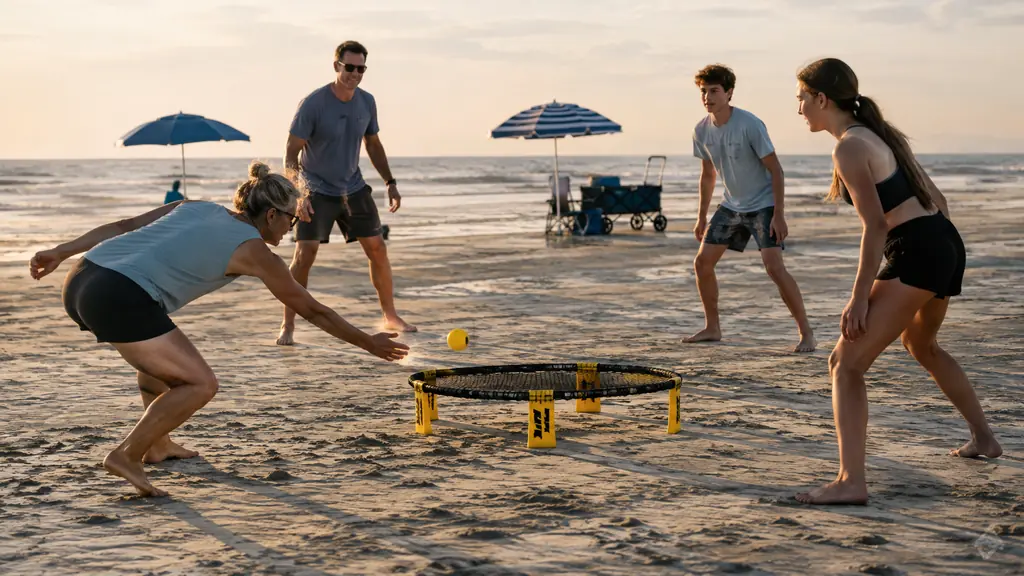
How I've Used It (and How It Got Tested)
The setup is a cottage on the Jersey Shore, rented every summer for the last eleven years. We are Joan and Walt, the grandkids come for a few weeks in July, and our beach kit is a wagon, two umbrellas, and a cooler that is never big enough. Most of our games happen on a wide, flat stretch of sand near the water at low tide, where the ground is packed hard and the wind is predictable until it is not.
The Spikeball set came into our lives because the grandkids were bored on day two of their visit. Day one is always a novelty, the ocean, the seagulls, the sand castles. Day two is when the phones start to drift out. My grandson had seen roundnet on a college campus and asked if we could get one. Walt ordered it, it arrived in two days, and by that afternoon we were doing our best to figure out the rules from the little booklet and a YouTube video that kept buffering on the beach.
We played nearly every day for a month. Some days it was the four of us, some days neighbors wandered over, and one unforgettable afternoon we had a six-person rotation going with a second net borrowed from a family two umbrellas down. I have played the game on hard-packed beach sand, on the loose dry sand up by the dunes, on grass, and once on a court at a schoolyard. Sand is the version I know best, so that is the version I am going to talk about.
What Nobody Tells You About Setting It Up
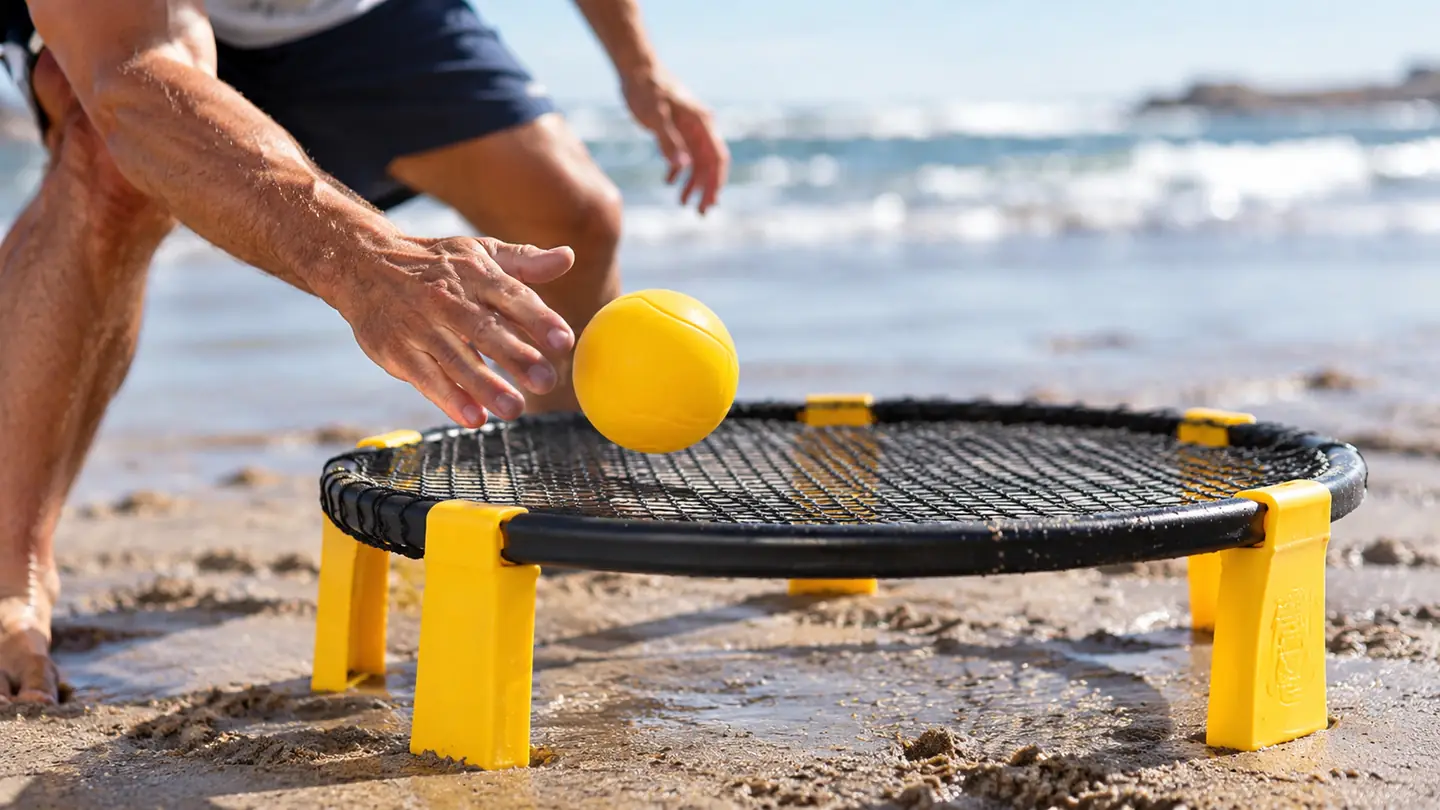
The first assembly is fiddly, and nobody in the marketing material admits it. The net comes folded inside its bag with the rim folded in half. You unfold the rim, fit the legs into their slots, and then you have to stretch the net over the edge. The net is designed to be tight, so the last few inches are a fight. The booklet says to do it in stages, and it is right, but it will not feel right the first time. Ten minutes, maybe fifteen if you have never done it. My grandkid did it in five after he had seen it once, so it is not a hard skill, just an annoying first date with the product.
The second thing nobody tells you is that the net tension is everything, and the net does not stay perfect on its own. When the legs are locked and the net is stretched evenly, the ball bounces true and the game feels like the videos. If one corner is looser than the others, the ball squirts sideways and you waste a lot of rallies chasing a bounce that was never your fault. The fix is simple: check the fit before you start, and do not be afraid to unclip one section and re-stretch it. It takes twenty seconds once you know what you are looking for.
And the third thing is the bag. It is a simple drawstring bag, generously sized, no padding, no shoulder strap worth mentioning. That sounds like a complaint, but it is the opposite. You can cram the whole set in there with a damp towel and a bag of sunscreen, sling it over the handle of the wagon, and forget it. The lack of structure is a feature when you are already carrying umbrellas and a cooler.
How the Game Actually Plays on Sand
Here is the part that surprised me the most. I assumed the ball would thud into the sand and die, the way a tennis ball does when it lands on soft ground. It does not, and the reason is the net. The ball drops onto a taut surface stretched over a frame, so it pops up with most of its energy intact. You are not relying on the ground to rebound, the net does the work. On hard-packed sand near the water, the bounce is clean and consistent. That is the surface to aim for.
Loose, dry sand is a different story, and one of the honest things I will tell you is that the sand fights back in a different way. The ball still bounces off the net, but your feet do not. Every lunge, every plant-and-turn, every quick change of direction is running in soft sand. It is a fantastic leg workout and a terrible surface for a person with iffy ankles. The grandkids, naturally, loved it, chasing balls that were clearly going to be out of reach, because the energy of youth outweighs the physics of the shoreline.
Wind is another factor the ads skip. The balls are not heavy, about the weight of a softball, and on a breezy afternoon the ball drifts on serve and on long lobs. You adapt by hitting flatter and keeping the ball lower, and honestly that makes the game better, it forces you to play with touch instead of power. But I will not pretend it is not frustrating on the two gusty days in July when we gave up and switched to horseshoes.
House rules matter more than the official rulebook, and this is the thing I would tell anyone buying the Spikeball set for a mixed-age group. The official game is two on two, three touches per side, no catching, and it rewards aggression. On the beach with a sixty-something knee involved, you can soften it. We played with a no-diving rule. We played with a rule that a ball that lands in the water is a redo instead of a point against you. We played one glorious afternoon with a grandparent on each team and no running allowed at all, which sounds like a joke until you discover it is an entirely different, smarter game that the kids lose. The net does not care about your house rules.
What It Does to a Mixed-Age Beach Group
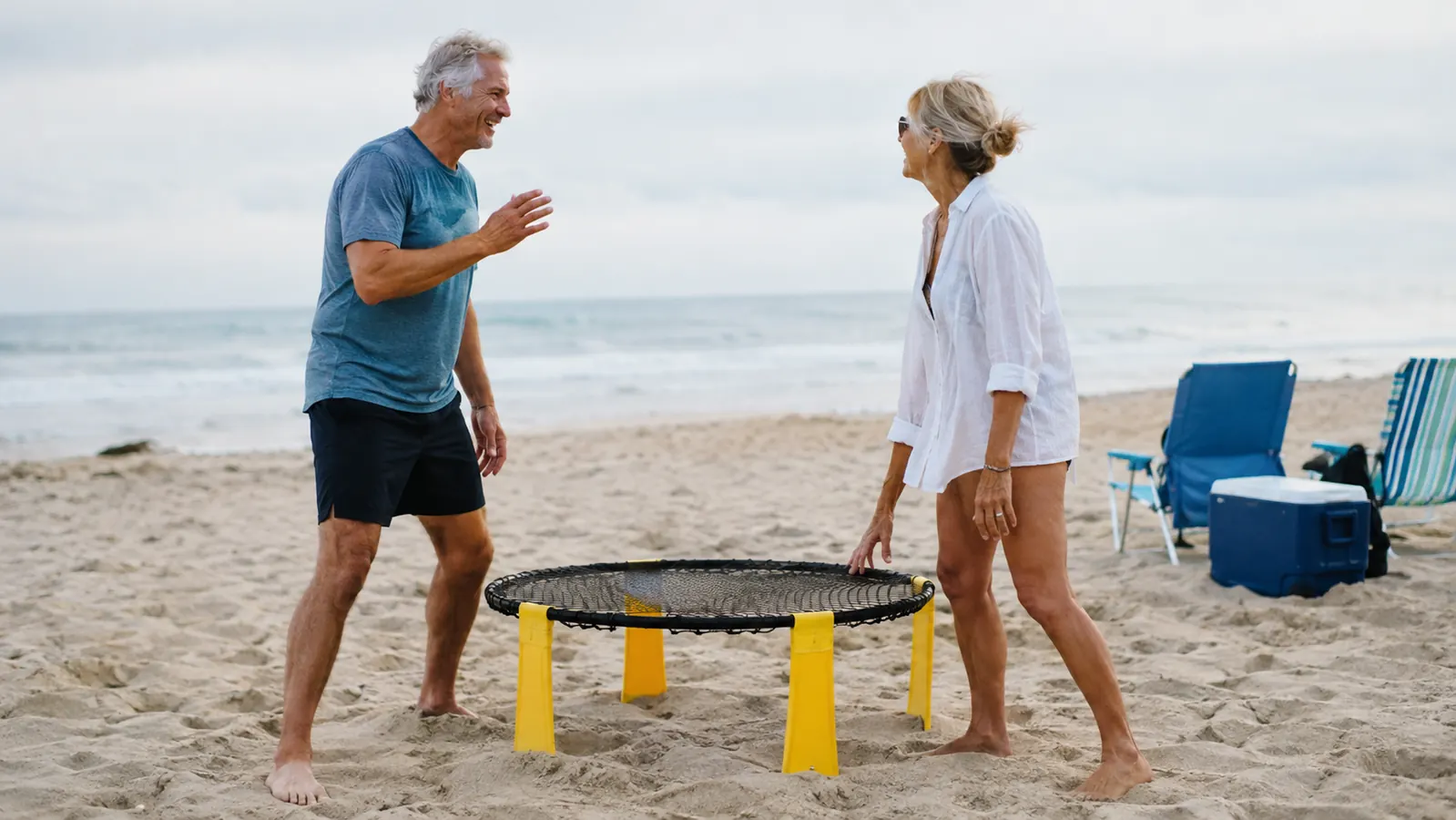
This is the heart of the honest review. The Spikeball Original is a fantastic game for people under thirty-five and a genuinely good game for people who can no longer dive but still want to move. The trouble is those two groups want different things from the same net. The younger players want to smash the ball and hit the highlight-reel angle. The older players want a rally that lasts more than three hits. Both are legitimate, and both are possible, but you have to talk about it before you start, or the game turns into two teenagers powering a ball past two grandparents who never get a touch.
On our stretch of sand, we found a rhythm that worked. The kids served and smashed. Walt and I played the soft game, placement over power, trying to put the ball where the next person is not. And here is the thing that surprised me: the kids got better at the soft game, and Walt and I got better at chasing, not diving, but getting a hand on balls we had no business reaching. By the end of the month the rallies were longer, the games were closer, and nobody was limping off the sand. That is the version of roundnet that works for a family.
The other thing the game does is make friends. Roundnet has a magnetic quality. The sound of the ball popping off the net carries across the beach, and people wander over. We had a fifty-year-old jogger stop to ask about the rules, a family from three umbrellas down ask to join for a set, and a teenager who played in college offer to teach us the proper serve. By August we had a loose little circle of people who knew that if the net was up near the water at 4 PM, there would be a game. That is not in the product description, but it is the real reason to buy one.
There is one more thing I want to say about the mixed-age thing, because it is the part of this review I wish someone had told me before we bought our set. On the beach, the game is only as good as the oldest player's willingness to laugh at a missed ball. The grandkids have the speed, but we had the patience, and patience wins a lot of rallies that speed never sees. A bad bounce, a gust of wind, a ball in the water, make it funny and the game keeps rolling. This is true of every beach game, but it is especially true of the Spikeball set, because the ball is loud and fast and the whole beach is watching.
Durability After a Month of Salt, Sand, and Sun
Now the part that worries people before they buy, will this thing survive the beach? Ours has. The Spikeball Original sat in the wagon, got covered in a fine grit of sand, spent two afternoons in direct sun while we ate lunch, and took one accidental kick from a kid chasing a seagull. The frame is still round, the legs still lock, the net still holds tension. The balls have picked up scuffs from the asphalt of a friend's driveway, but scuffs do not affect the bounce.
The honest warning is about salt and grit, not impact. Sand works its way into the fabric of the net and into the joints where the legs fold. If you leave it caked on, the grit grinds at the mechanism and the net gets stiff. Our routine was two minutes when we got back to the cottage: shake the whole set out over the deck, rinse the frame with the hose, and let it dry shaded and open. That is it. We did that every night and the set still looks and plays like it did in week one.
The one real complaint I have, and I want to be straight about this, is that the playing surface is everything, and the game does not travel well to a bad one. On loose dry sand the net sinks a little when you plant a foot near the rim, and the bounce changes mid-rally. On a slope, forget it. It is a game for flat ground, and on a beach that means the packed stretch below the tide line. That is a limitation, and I would rather name it than pretend the Spikeball set works equally well on every patch of sand on the shore.
What I Liked
- Sets up fast once you learn the tension trick, and packs flat into the included bag
- The net bounce is genuinely satisfying on packed sand, easy to learn, hard to master
- Pulls a whole beach crowd together and the grandkids ditch their phones for hours
- Holds up to sand, salt, and direct sun when you rinse it off at night
Where It Falls Short
- Net tension and leg fit are fiddly the first few times you assemble it
- Needs flat, packed ground, loose sand and slopes ruin the bounce
- The fast, hard ball is too much for young children and tough on weak ankles
- The balls drift on windy days, so plan around the breeze
Two minutes of rinsing every night, and the set still plays like it did in week one.
Who This Is For
For active families, for anyone who has a crew that likes a real game instead of a passive beach day, for grandparents who are honest about their limits and willing to play the soft version, and for anyone who wants a game that packs into a bag the size of a small steering wheel and turns four strangers into a group of friends by the end of the afternoon. The Spikeball Original earns its spot in the wagon.
If you have a teenager who is glued to a screen and a stretch of flat sand, this is the simplest way I know to fix the first problem using the second. Our grandkids did not ask for their phones once during any afternoon the net was up. That alone convinced me we made the right call.
Who Should Skip It
Skip it if your group is mostly under eight, or if anyone who wants to play has a knee or ankle that will not tolerate quick lateral moves. Skip it if your beach day is a chair, a book, and a cold drink, because this game will pull you out of that chair. And skip it if you only have a small patch of soft, sloping sand, because the Spikeball set needs flat ground to give you the game it is capable of. None of that is a defect in the product. It is a matter of matching the game to the people and the beach.
Do not feel bad if that is you. We have a whole stretch of beach where the group two umbrellas down was perfectly happy with their chairs and their paperback novels, and they never once looked at our net with envy. A beach game only works if the people on the sand want to play it, and the Spikeball Original does not convert a reluctant player the way a good wave does. The wave is the better salesman.
Bring the net, not the phones
After a month of daily play, ours is still going strong and the grandkids are already asking when we are renting the cottage again. If that sounds like your kind of summer, this is the set to start with.
Amazon See Today's Price on Amazon →